





Now Reading: If Abraham Lincoln Lived Today: A Statesman in the Age of Wi-Fi
-
01
If Abraham Lincoln Lived Today: A Statesman in the Age of Wi-Fi

If Abraham Lincoln Lived Today: A Statesman in the Age of Wi-Fi
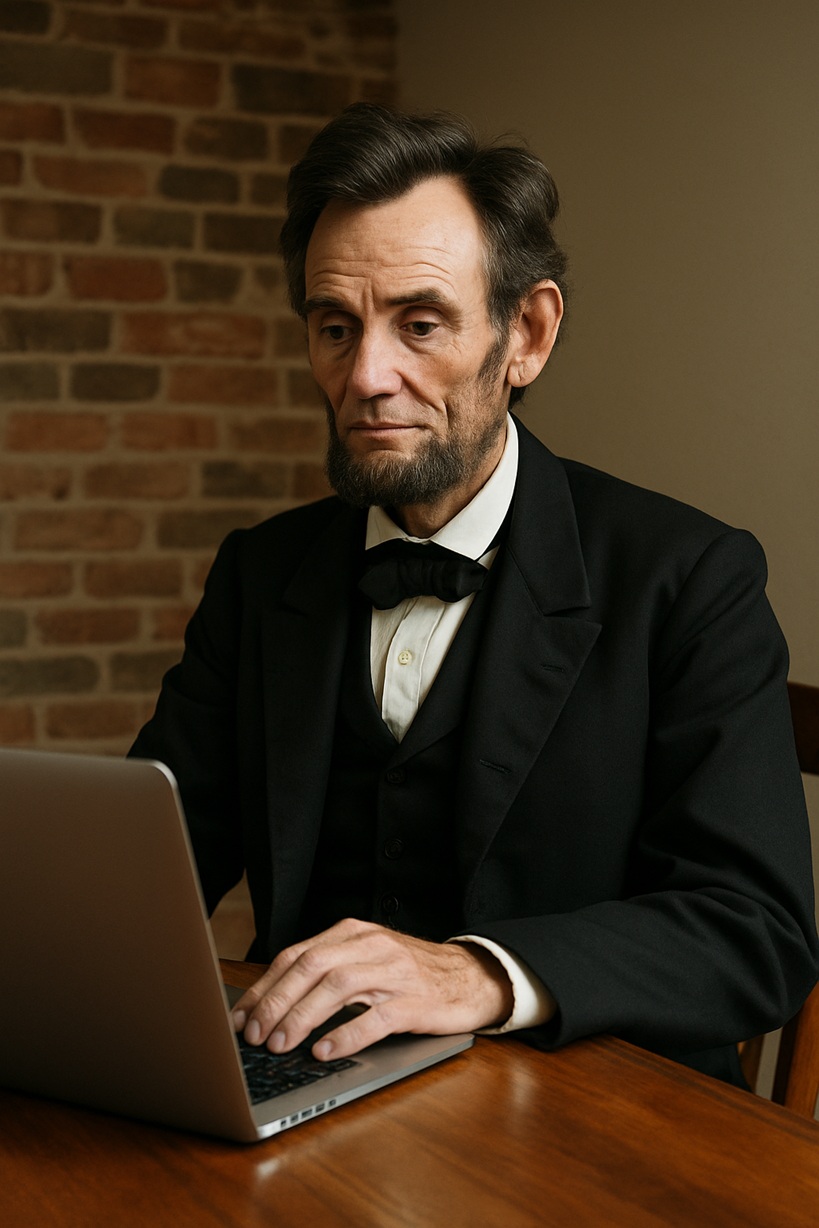
Imagine this: Abraham Lincoln, stovepipe hat and all, steps out of history and into a world of smartphones, streaming services, and social media hashtags. His long frame towers over a sea of glowing screens, and yet — he doesn’t seem lost. In fact, he seems… curious.
A young Gen Z college student tries to show him how to use TikTok. Lincoln, eyes twinkling, watches a 30-second dance video before leaning in and asking, “Does this help win hearts or just waste time?” The student laughs. Lincoln doesn’t scold — he smiles. He understands that every generation has its way of expressing itself. He simply wonders if we’re still making room for reflection, thoughtfulness, and listening.
Lincoln had a deep respect for words. If he had access to today’s technology, he’d likely use it not to divide — but to unite. His Gettysburg Address would go viral not because it was short, but because it was profound. He’d use Twitter sparingly, Instagram humbly, and probably skip TikTok altogether. “Too short for real thought,” he might say with a chuckle. “But very good for dance.”
Imagine him sitting in front of a laptop, squinting slightly, glasses perched low on his nose. He wouldn’t be intimidated by technology — he’d ask questions. “How does this tool help the people?” That was always Lincoln’s measure. He wouldn’t fear change — he’d ask whether it served justice, lifted burdens, or brought us closer together as Americans.
And Gen Z? He’d respect them. He’d marvel at their creativity, their ability to organize, their passion for fairness and equality. “Reminds me of some young men I knew during the war,” he’d say. “Fired up and full of ideas.” He wouldn’t shake his head at their tattoos or hairstyles. He’d care about their character, not their clothing.
What Lincoln might struggle with is our noise — the rush, the anger, the constant need to shout louder to be heard. He’d remind us of the power of silence, of a carefully chosen phrase. “With the right words,” he once said, “a man can sway a nation.” Imagine what he’d do with a blog.
He’d caution against using technology to isolate ourselves. He’d walk into a crowded coffee shop, see everyone staring at their screens, and gently say, “You’re missing the best part — each other.”
And perhaps that’s what we, especially those of us over 50, would appreciate most about Lincoln in today’s world. His quiet strength. His belief in reason over rage. His deep moral compass in a time when the compass seems to spin in circles.
Lincoln would remind us that while the tools have changed — the human heart has not. We still long for decency, for purpose, for leaders who tell the truth and carry the weight of their words.
And in a world of endless scrolling, he’d urge us to pause — and think.