













Now Reading: Real SpongeBob and Patrick Found — in the Deep Sea!
-
01
Real SpongeBob and Patrick Found — in the Deep Sea!

Real SpongeBob and Patrick Found — in the Deep Sea!
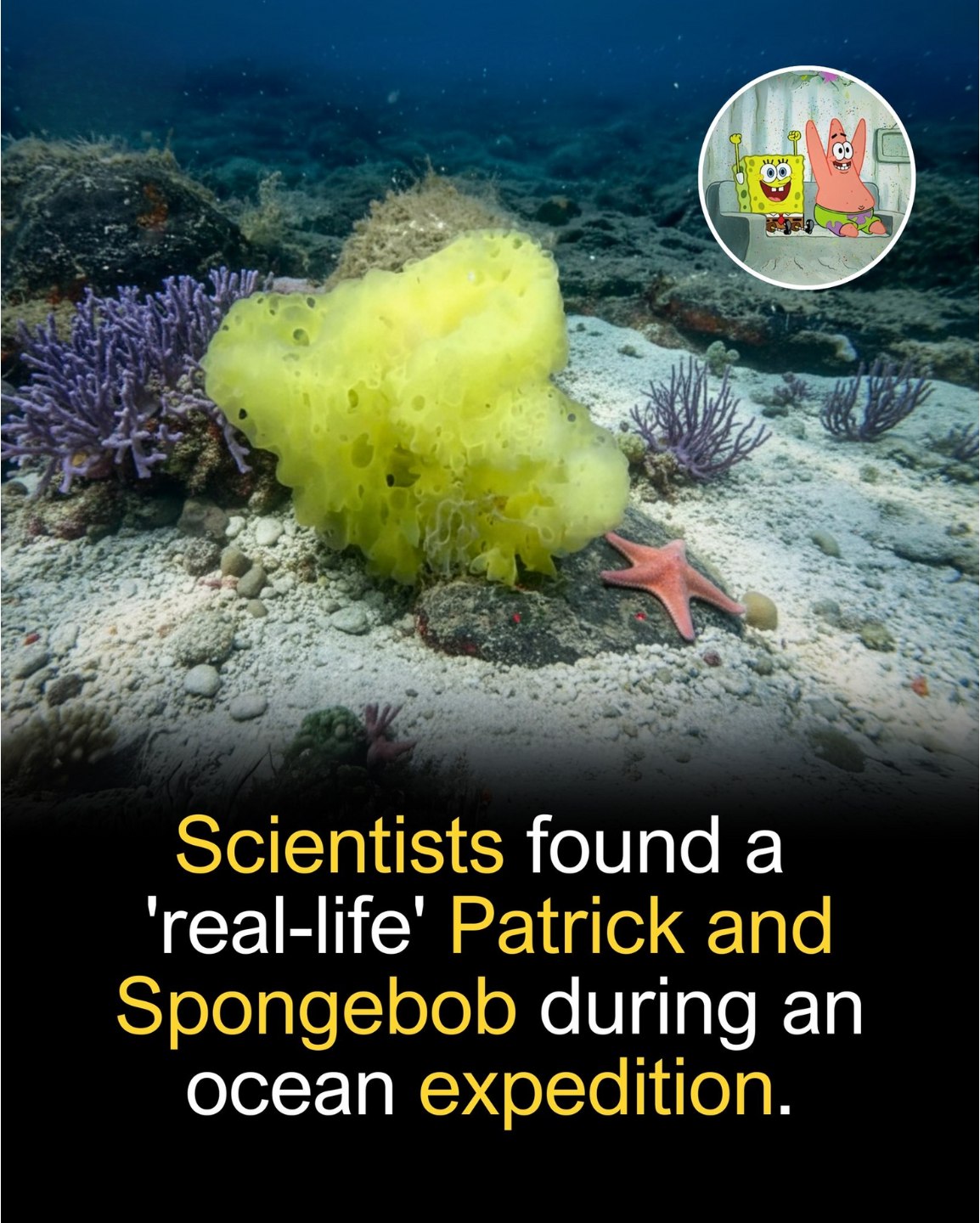
Sometimes, real life is stranger — and sweeter — than fiction.
In 2021, scientists aboard the NOAA ship Okeanos Explorer made an underwater discovery that delighted both marine biologists and cartoon fans alike. Off the coast of New York, more than a mile beneath the waves, a bright yellow sea sponge was spotted sitting right beside a cheerful pink sea star on the ocean floor. The scene looked almost too perfect — a real-life SpongeBob SquarePants and Patrick Star, together at last.
The image quickly spread across the internet, sparking laughter and nostalgia for generations who grew up with the beloved Nickelodeon characters. For many, it was a reminder that even in the vast, mysterious deep sea, a touch of whimsy can still be found.
But beyond the smiles, the sighting carried some fascinating science. The sponge belonged to the genus Hertwigia, while the starfish — or “sea star,” as scientists prefer to say — was a Chondraster, known for its bubblegum-pink color and soft, stubby arms. These creatures inhabit the cold, dark depths of the Atlantic, where sunlight never reaches and strange forms of life thrive in silence.
However, nature’s version of SpongeBob and Patrick has a twist that would never make it into Saturday morning cartoons: sea stars like Chondraster are known to feed on sponges. In the wild, “Patrick” would likely be munching on “SpongeBob,” not hanging out beside him.
Still, the photo struck a chord. It reminded many Americans that beneath all our technology and noise, the natural world continues to surprise, amuse, and connect us. The deep sea, often imagined as dark and lifeless, turned out to be home to a pair of bright, familiar “faces” — symbols of friendship, humor, and the unexpected beauty of the ocean.
So while this SpongeBob and Patrick duo won’t be flipping Krabby Patties or jellyfishing anytime soon, they gave the world something else — a reason to smile, and a reminder that wonder can appear in the most unlikely places, even a mile beneath the sea.