





Now Reading: She Demanded Rent for My Childhood Home — Too Bad I Own It
-
01
She Demanded Rent for My Childhood Home — Too Bad I Own It

She Demanded Rent for My Childhood Home — Too Bad I Own It
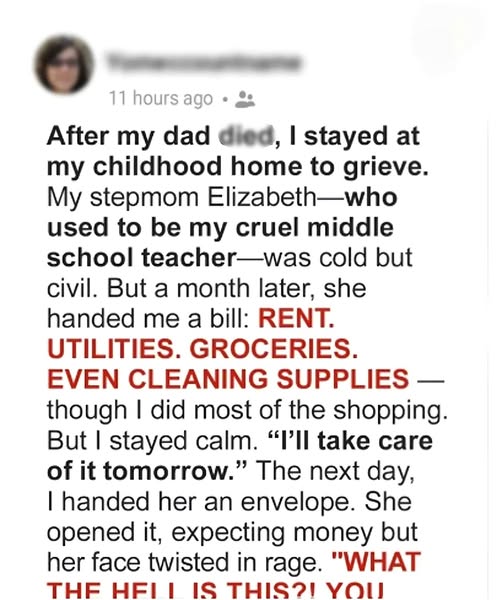
After her father’s sudden passing, Jenelle returned to her childhood home seeking comfort—only to be met with a rent bill. Her much-younger stepmother, Elizabeth, once her harsh middle school teacher, had taken over the house like a queen. But what Elizabeth didn’t know was that Jenelle legally owned it. Her father’s will made it clear, and Jenelle was done staying quiet.
The house still carried her father’s scent—cedarwood, coffee, and too much cologne. Jenelle moved through her grief quietly, doing laundry, cooking, and caring for the kids. Meanwhile, Elizabeth strutted through the halls, issuing orders and pretending to be in charge. A month after the funeral, she handed Jenelle an envelope listing rent, utilities, and even groceries.
Jenelle said nothing. The next morning, she handed Elizabeth her own envelope—not a payment, but a notice. Her lawyer, Kyle, arrived soon after. He informed Elizabeth that the house had been left entirely to Jenelle. The will was official and untouchable. Elizabeth turned red, yelled, and threatened court, but there was nothing she could do. Jenelle gave her thirty days to vacate.
Once Elizabeth left, calm returned. The house was no longer a battlefield—it was a sanctuary. Jenelle began sorting through her father’s things, uncovering memories tucked away in drawers and closets. Each item reminded her of the man who had loved her unconditionally.
Among the belongings, she found a note tucked into an old book: “You’ll always be Dad’s girl.” The sadness didn’t vanish, but it softened. The house slowly shifted from a place of loss to one of healing, carrying not just memories of grief, but also love, resilience, and peace.