












Now Reading: Switzerland is truly an amassing country
-
01
Switzerland is truly an amassing country

Switzerland is truly an amassing country
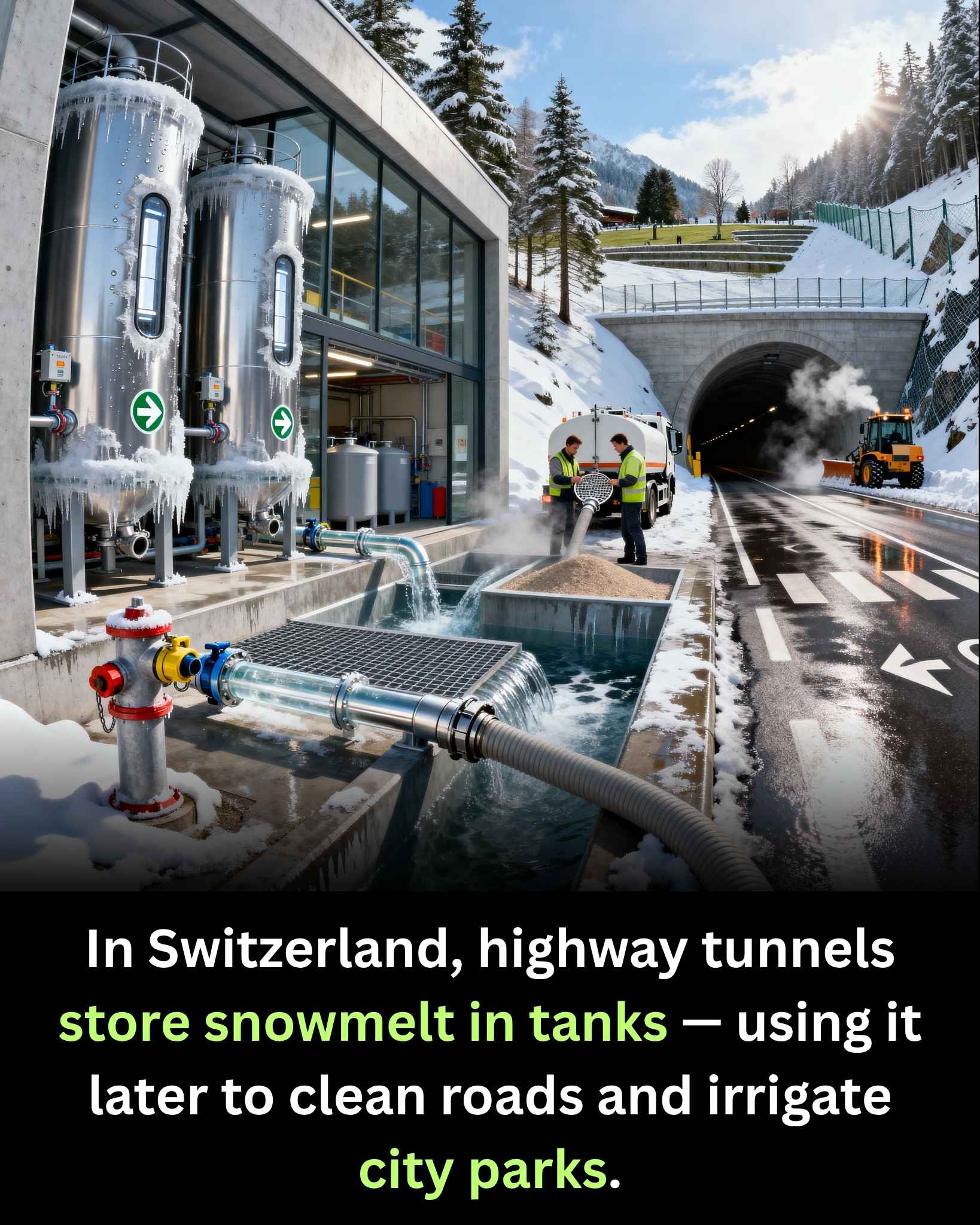
In Switzerland, a country renowned for its environmental foresight, engineers have found a creative way to turn winter’s excess into summer’s resource. Along its highway tunnels, large storage tanks are now being used to collect snowmelt — the runoff that results when snow accumulated during the winter begins to thaw. Rather than letting this clean, mineral-rich water disappear into drains or rivers, these systems channel it into underground reservoirs where it’s preserved for later use.
During the warmer months, this stored snowmelt serves multiple public functions. Municipal crews draw from these reserves to clean roads and sidewalks, reducing the need to extract fresh groundwater or tap into municipal supplies. In urban areas, where green spaces often face drought stress, the same water is directed through eco-friendly irrigation systems to hydrate city parks, community gardens, and roadside trees.
By harnessing snowmelt, cities in Switzerland not only reduce their water consumption but also lower maintenance costs, avoid overburdening stormwater systems, and limit the use of treated potable water for non-drinking purposes. The initiative fits seamlessly into the country’s broader vision of circular resource use — transforming seasonal challenges into year-round sustainability opportunities.
This innovation highlights how localized environmental features, like snowfall, can be leveraged through smart infrastructure to support everyday urban functions. It’s a silent system — mostly hidden from public view — yet it plays a vital role in greening the city and reducing the carbon footprint of municipal operations.