











Now Reading: The Link That Changed Everything: How Tim Berners-Lee Built the World Wide Web
-
01
The Link That Changed Everything: How Tim Berners-Lee Built the World Wide Web

The Link That Changed Everything: How Tim Berners-Lee Built the World Wide Web
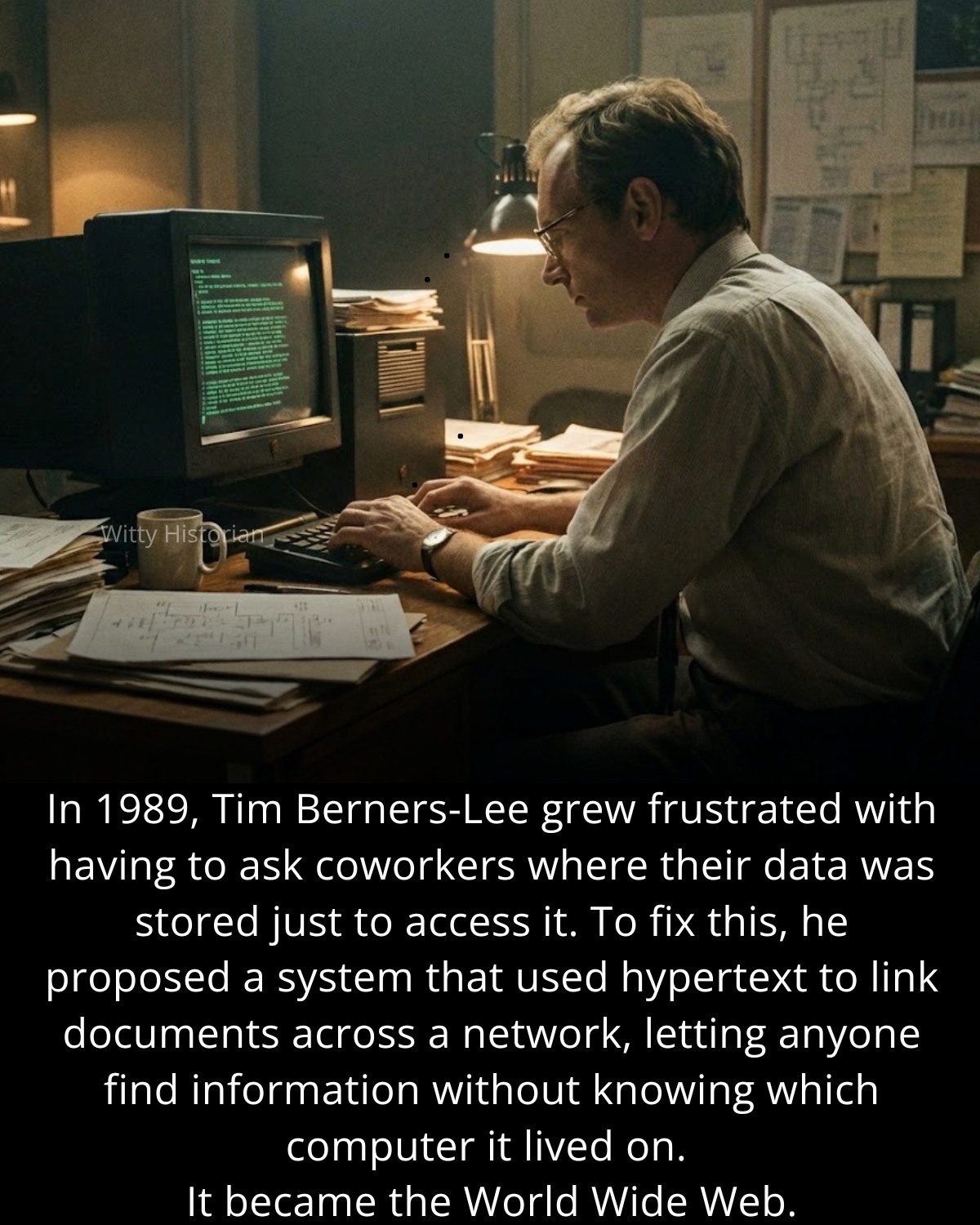
In the late 1980s, the world’s most advanced research facility, CERN, was facing a surprisingly mundane crisis: a “knowledge leak.” As scientists from across the globe rotated through the laboratory, they brought with them a chaotic mix of incompatible computers, proprietary file formats, and siloed storage systems. To find a specific piece of data, a researcher often had to physically track down the person who owned the machine it lived on. Information wasn’t just digital; it was geographical, locked behind specific office doors.
The Problem of Digital Silos
Before the Web, the internet existed, but it was a collection of isolated islands. Knowledge was fragile and scattered. If a researcher left CERN, their data often became effectively invisible to those remaining. Tim Berners-Lee, a software engineer at the lab, realized that the bottleneck wasn’t a lack of information, but the “friction” of accessing it. He envisioned a system where the location of the data—which computer or server it sat on—became irrelevant to the user.
A Deceptively Simple Solution: Hypertext
Berners-Lee’s 1989 proposal was not focused on flashy graphics or complex processing. Instead, it centered on hypertext. His idea was to allow documents to link directly to one another. By clicking a reference, a user could “jump” to another document instantly, regardless of which machine hosted the file. By combining this concept with the internet’s existing infrastructure, he created a decentralized web of information.
From Isolated Machines to Shared Space
This quiet proposal fundamentally shifted the architecture of human knowledge. It turned computers from isolated filing cabinets into a single, shared global space. By making information location-independent, Berners-Lee ensured that we no longer have to ask where data lives; we simply follow the link. Today’s modern internet, from social media to global commerce, still operates on this same foundational principle of removing friction to let information connect itself.