













Now Reading: The Aurora Through the Ice: Wisconsin’s Winter Spectacle
-
01
The Aurora Through the Ice: Wisconsin’s Winter Spectacle

The Aurora Through the Ice: Wisconsin’s Winter Spectacle
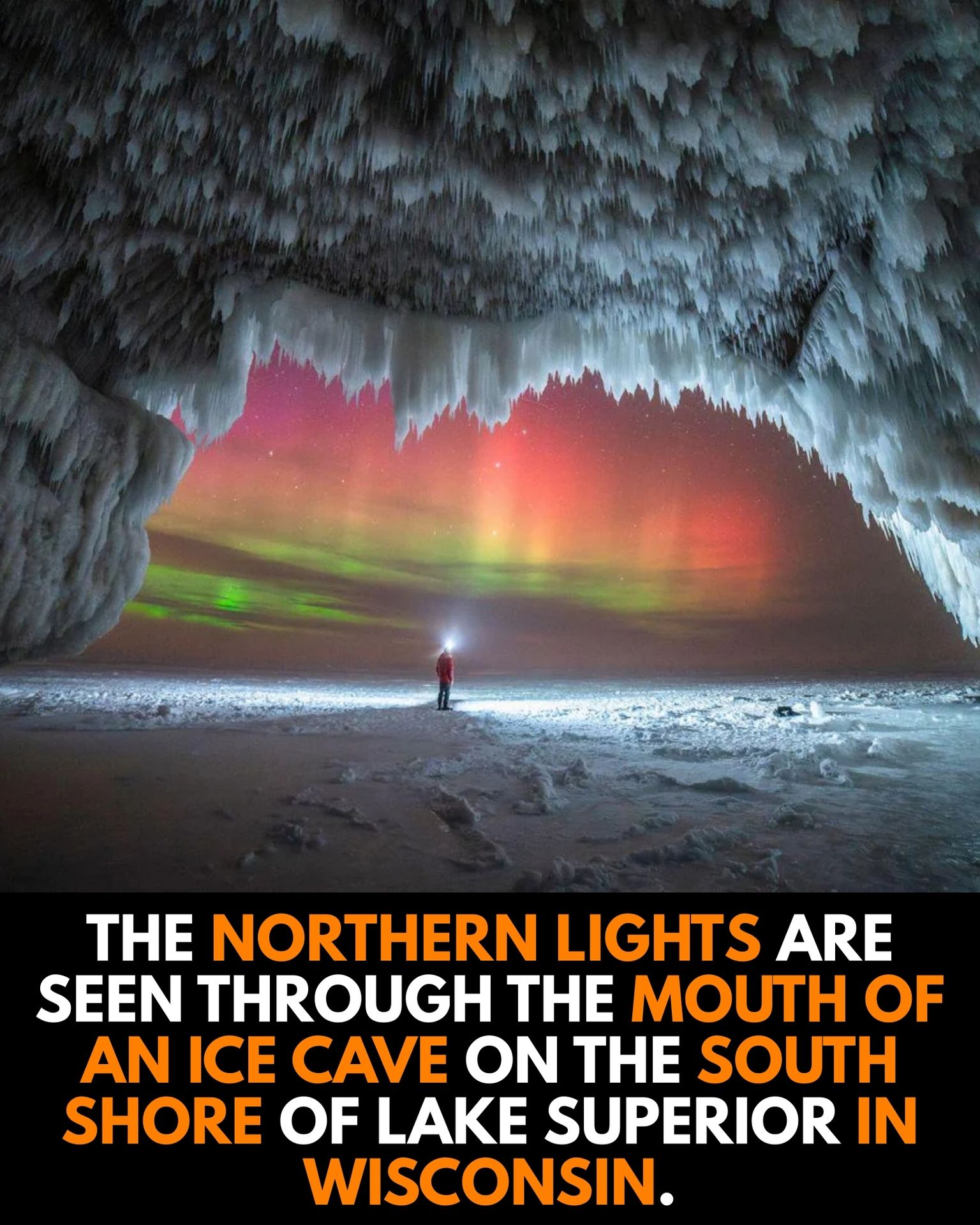
On the rugged South Shore of Lake Superior, a rare geographical alignment creates a scene that feels more like another planet than the American Midwest. Here, the frozen sea caves of Wisconsin offer a literal window into one of the universe’s most breathtaking displays: the Aurora Borealis.
While the Northern Lights can be seen across various high-latitude regions, viewing them through the crystalline mouth of an ice cave is an experience of a different caliber. It is the intersection of two slow-moving natural forces—the geological patience of shifting ice and the high-energy physics of the solar wind.
The Architecture of the Caves
The ice caves of Lake Superior are not static structures. They are carved over millennia by the relentless “freeze-thaw” cycles and the crashing waves of the Great Lakes. During the depths of winter, these sandstone chambers are transformed into cathedrals of ice.
Giant columns of frozen runoff—often called ice curtains—drape over the entrances, acting as natural prisms. When the aurora reaches a high enough Kp-index (a measure of geomagnetic activity), the light doesn’t just hang in the sky; it bleeds into the ice itself.
The Science of the Glow
The vibrant greens, purples, and pinks that dance above the lake are the result of charged particles from the sun colliding with gases in Earth’s atmosphere.
As these hues ignite the sky, the cave entrance serves as a dark frame, intensifying the contrast. The reflective surface of the frozen lake and the translucent ice walls bounce the light, creating a 360-degree immersive environment of shifting color.
A Rewarding Challenge
Reaching this vantage point is an act of endurance. Because the caves are only accessible when the lake ice is thick enough to support foot traffic, the window for visitation is narrow and unpredictable. Travelers must brave sub-zero temperatures and biting winds, trekking across the “frozen sea” to reach the remote cliffs.
However, for those who make the journey, the reward is a moment of profound isolation and beauty. It is a rare opportunity to see the Earth and the heavens converge in a silent, glowing theater of ice.