













Now Reading: The Arctic Lens: How Ancient Innovation Defeated the Polar Glare
-
01
The Arctic Lens: How Ancient Innovation Defeated the Polar Glare

The Arctic Lens: How Ancient Innovation Defeated the Polar Glare
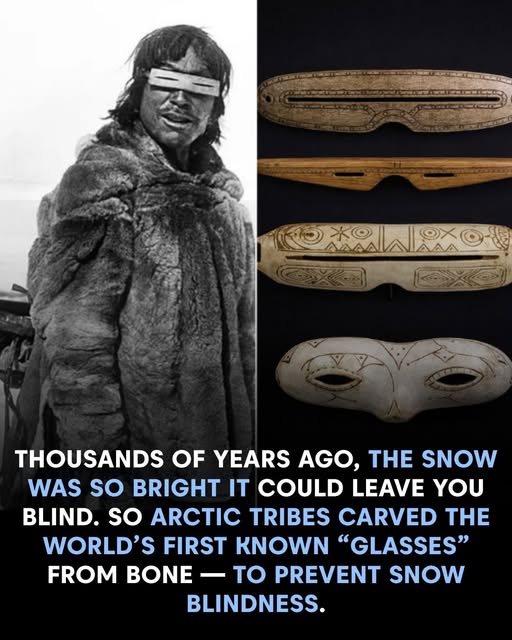
In the vast, monochromatic expanse of the Arctic, the sun is often less of a friend and more of a formidable foe. While the temperature poses an obvious threat, the visual environment creates a more insidious danger: photokeratitis, commonly known as snow blindness. This condition occurs when the eyes are essentially sunburned by UV rays reflecting off the snow, leading to temporary blindness and excruciating pain.
Centuries before the advent of modern UV-rated plastics, the Inuit and Yupik peoples of Alaska and northern Canada engineered a sophisticated solution to this environmental hazard. Their creation—the snow goggles—stands as one of the most elegant examples of functional design in human history.
Engineering with Earth’s Materials
Lacking glass or synthetic polymers, Arctic communities looked to the land for materials that could withstand extreme cold without becoming brittle. They utilized driftwood, walrus ivory, caribou antlers, and bone to carve sleek, face-contoured frames.
The design was deceptively simple but scientifically sound. Rather than using a transparent lens, these goggles featured narrow horizontal slits. This geometry served two critical purposes:
-
Light Reduction: The slits restricted the amount of light entering the eye, significantly lowering the risk of UV damage.
-
Focus Enhancement: Much like a pinhole camera, the narrow opening increased the depth of field, sharpening the wearer’s vision across the horizon—a vital advantage when tracking game or navigating shifting ice.
To further combat the blinding white-out conditions, the interiors of the goggles were often coated with lampblack or soot. This dark matte finish absorbed stray light, eliminating internal reflections and enhancing visual contrast.
More Than Survival: Artistry and Identity
While the primary goal was survival, these goggles were also canvases for cultural expression. Many surviving examples feature intricate carvings and geometric patterns. These embellishments often served as markers of personal identity or spiritual symbols, connecting the hunter to his community and the land. Each pair was custom-fitted to the wearer’s face, ensuring a light-tight seal against the cheeks and brow.
A Legacy of Indigenous Ingenuity
The development of snow goggles is a testament to the profound scientific understanding held by Indigenous peoples. Through generations of observation and trial, they mastered the principles of optics and material science to thrive in an unforgiving climate. These artifacts remind us that “high technology” isn’t always about electronics; sometimes, it is the perfect marriage of ivory, soot, and an intimate knowledge of light.