







Now Reading: The Radical Silence of Dunsany: A Blueprint for Rewilding
-
01
The Radical Silence of Dunsany: A Blueprint for Rewilding

The Radical Silence of Dunsany: A Blueprint for Rewilding
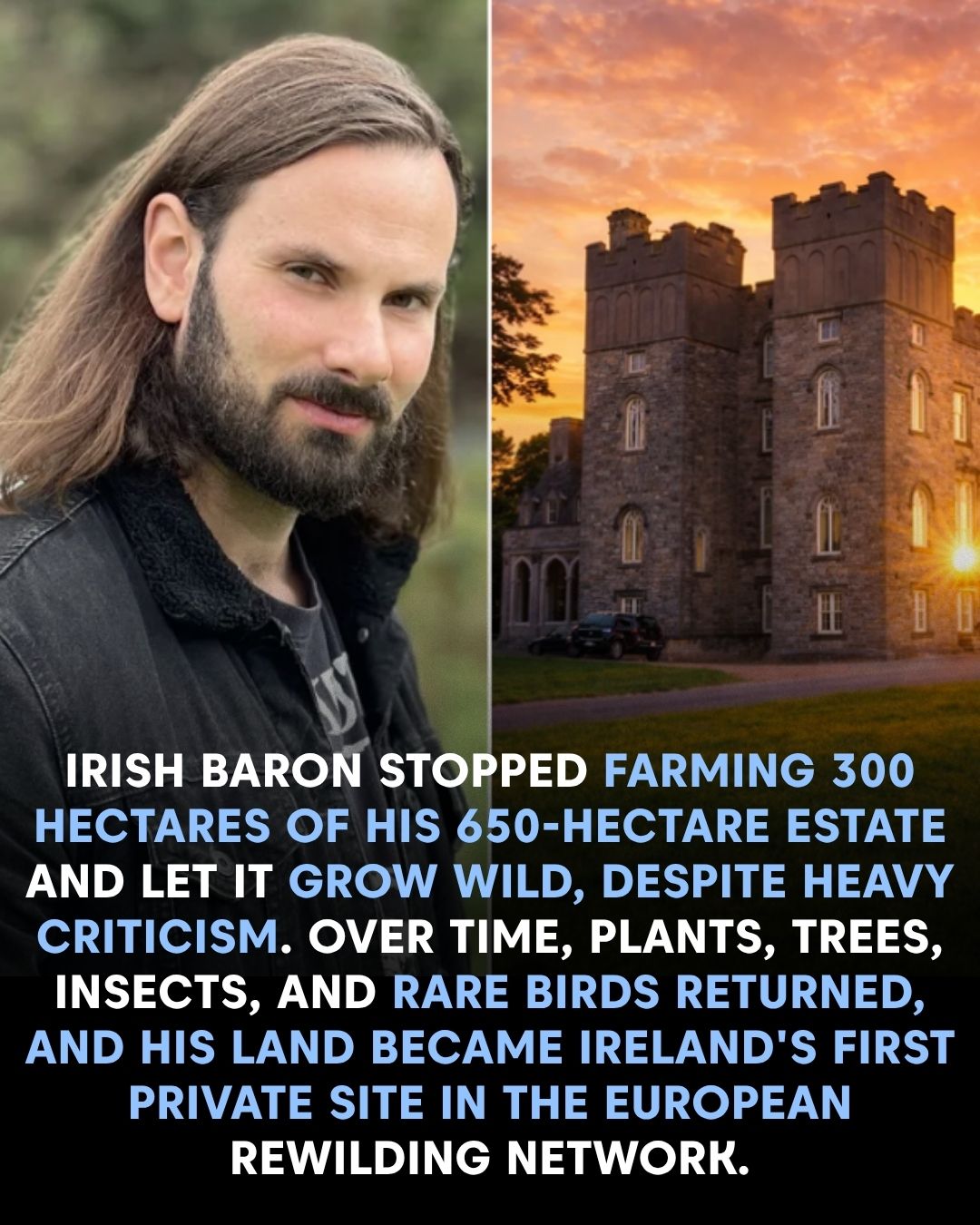
When Randal Plunkett, the 21st Lord Dunsany, inherited his family’s 650-hectare estate in County Meath, Ireland, the script was already written. Like the generations before him, he was expected to maintain the manicured lawns and productive pastures of a traditional farm. Instead, in 2014, Plunkett opted for a radical departure from tradition: he decided to do absolutely nothing.
By setting aside 300 hectares—nearly half the estate—and designating it as a “no-intervention” zone, Plunkett launched one of the most significant rewilding projects in Ireland. The transition was abrupt. Livestock were removed, mowing ceased, and chemical fertilizers were banned. Initially, the project was met with skepticism and local criticism; to the traditional eye, the land appeared to be falling into “waste” or neglect.
However, nature’s definition of productivity differs greatly from agriculture’s. Without the constant pressure of grazing and machinery, the land began a rapid process of self-healing. Long-dormant seeds in the soil began to stir. Native grasses surged, followed by a vibrant tapestry of wildflowers. In a process known as natural succession, pioneer species paved the way for sturdier trees. Oak, ash, and hazel began to sprout, not through human planting, but through the natural dispersal of seeds by wind and birds.
As the flora diversified, the fauna followed. The return of native insects provided a rich food source that revitalized the entire food chain. Rare sightings became common occurrences. The ghostly silhouette of the barn owl and the presence of pine martens signaled that a complex, balanced ecosystem was re-establishing itself. Dunsany was no longer just a farm; it had become a sanctuary.
Today, the skepticism has largely been replaced by scientific acclaim. Dunsany Estate is recognized as Ireland’s first private member of the European Rewilding Network. It serves as a living laboratory for conservationists and a poignant reminder of the land’s inherent resilience. Plunkett’s experiment proves that ecological restoration doesn’t always require complex engineering or massive budgets. Sometimes, the most profound environmental act is to simply step back, relinquish control, and let the wild reclaim its throne.