












Now Reading: A Nation Under Siege by Nature: As Texas Struggles with Floods, California Engulfed by Fire
-
01
A Nation Under Siege by Nature: As Texas Struggles with Floods, California Engulfed by Fire

A Nation Under Siege by Nature: As Texas Struggles with Floods, California Engulfed by Fire
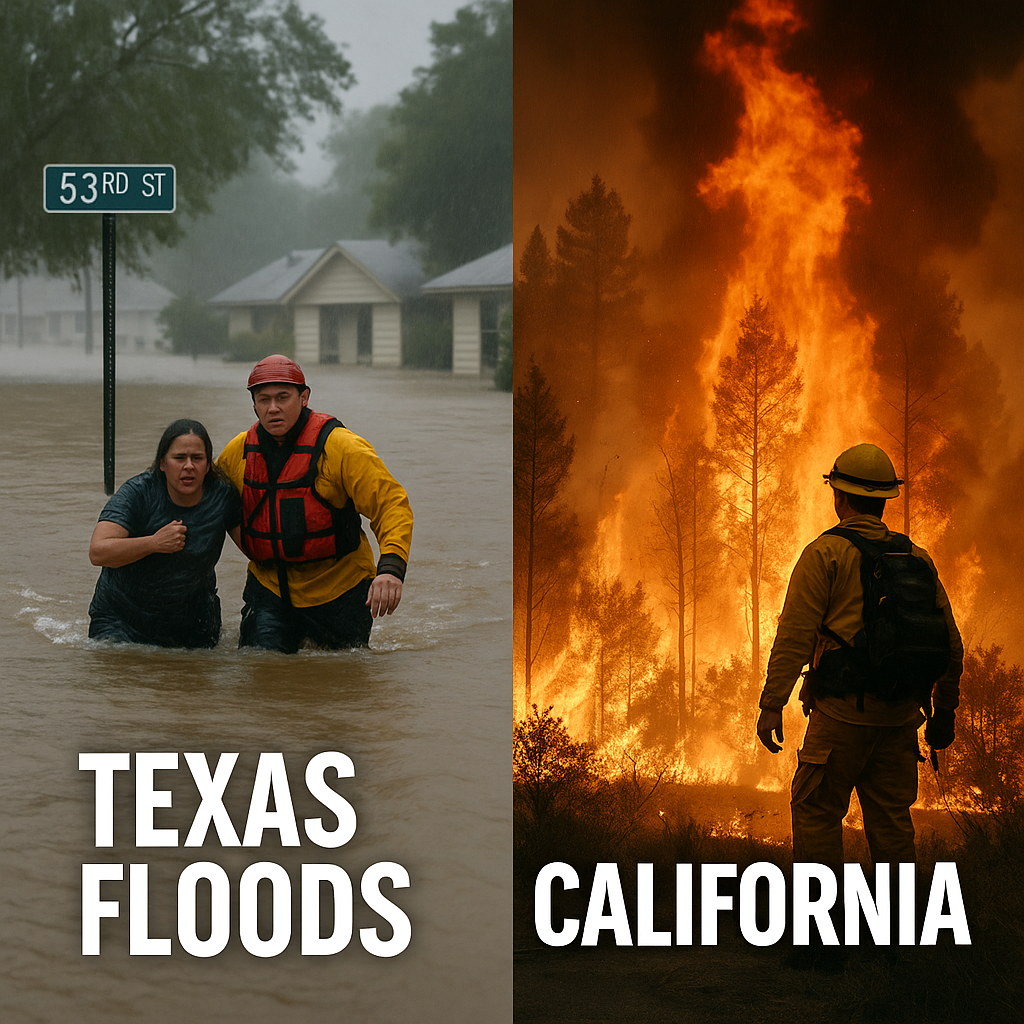
As the United States enters the height of summer, two of its largest states are facing opposite but equally devastating natural disasters. Texas is grappling with historic flooding, while California battles raging wildfires, painting a stark picture of a nation under increasing climate stress.
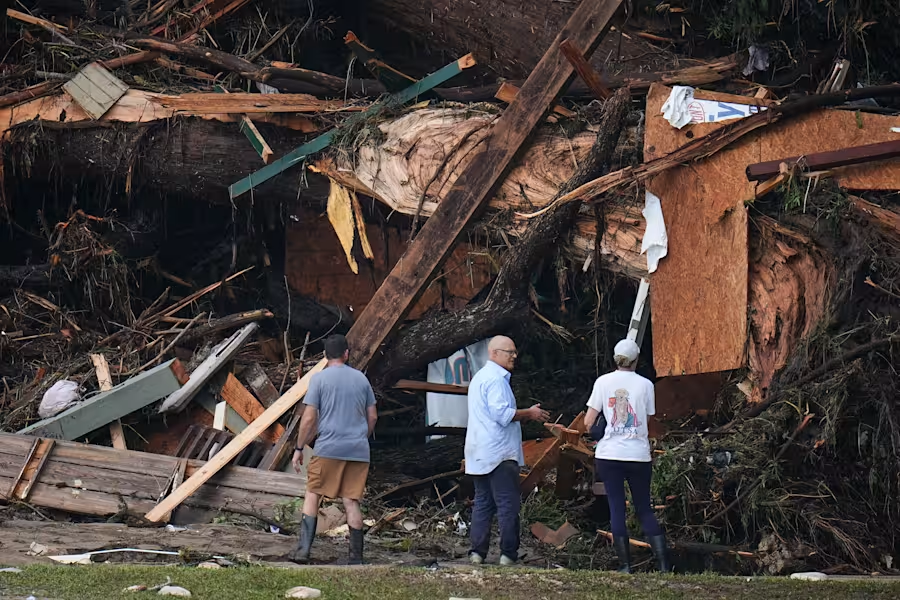
In Texas, torrential rains have overwhelmed rivers, submerged towns, and forced thousands from their homes. Emergency responders across the state have been working around the clock, conducting water rescues and coordinating evacuations. In Houston, rainfall totals have shattered previous records, with some areas receiving over 15 inches of rain in just 48 hours. The National Weather Service has issued continued flood warnings, as rivers and reservoirs remain dangerously high. For many families, the destruction has come swiftly—washing away homes, cars, and businesses, leaving behind only mud and uncertainty.
Meanwhile, on the opposite side of the country, California is once again confronting the fury of wildfires. Fueled by extreme heat and prolonged drought, multiple blazes have erupted across the state, including a fast-moving inferno near Redding that has already consumed over 40,000 acres. Thousands of residents have been ordered to evacuate as flames threaten homes, schools, and infrastructure. The air is thick with smoke, and health officials have warned vulnerable populations to stay indoors. Firefighters from across the western U.S. have been deployed to help contain the flames, but containment remains low amid gusty winds and triple-digit temperatures.
The contrast between the disasters is striking—Texas drowning in water, California scorched by flame—yet both are linked by a common thread: the increasing volatility of our climate. Scientists have long warned that climate change would intensify weather patterns, making floods more severe and wildfires more frequent and destructive. What were once considered “once-in-a-generation” events are now occurring with alarming regularity.
Local leaders and citizens alike are calling for greater national attention and support. “Our communities are on the frontlines,” said a Texas county official. “We need immediate help, but we also need long-term solutions.” In California, similar sentiments echo. “We can’t fight these fires year after year without addressing the root causes,” a firefighter shared through tears after days on the front lines.
The federal government has activated emergency relief programs in both states, but the scale of destruction poses serious questions about preparedness and resilience. How can states adapt to ever-growing extremes? What investments are needed to strengthen infrastructure, improve early warning systems, and build more climate-resilient communities?
As Americans watch the devastation unfold from coast to coast, there is a growing sense that these disasters are not isolated incidents—they are part of a broader, nationwide reckoning with the forces of nature. The flooding in Texas and the fires in California are stark reminders that we live in a time where climate no longer respects borders or seasons.
In the face of tragedy, stories of bravery and compassion are also emerging. Neighbors helping neighbors, communities coming together, and first responders risking their lives daily. But the road to recovery will be long—and the need for action, urgent.