













Now Reading: Learn more about Singapore’s plant-covered skyscrapers
-
01
Learn more about Singapore’s plant-covered skyscrapers

Learn more about Singapore’s plant-covered skyscrapers
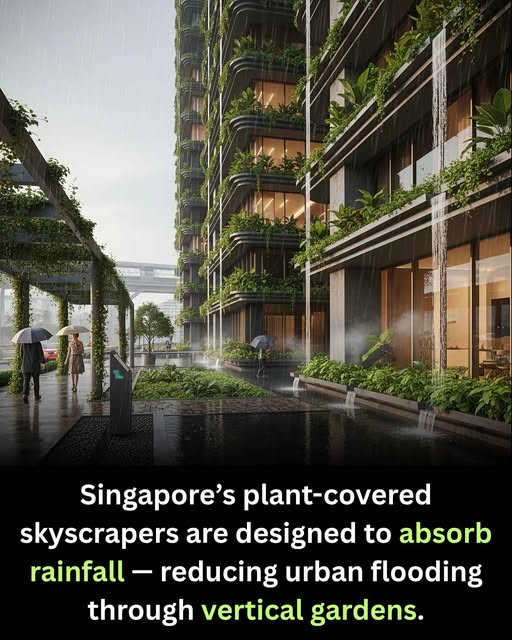
Singapore’s skyline is rapidly transforming into a model of vertical eco-architecture, with plant-covered skyscrapers that do more than just look beautiful. These innovative buildings are designed with layered vegetation systems, often referred to as “sky gardens,” that serve both functional and environmental purposes. One of their most impactful features is the ability to absorb and manage rainfall — a solution tailored for a city prone to heavy tropical downpours.
The vertical greenery acts as a sponge, soaking up rainwater across multiple tiers of a building. Special substrates, soil beds, and drainage layers within the garden walls filter and slowly release the water. This reduces the pressure on ground-level drainage systems and prevents flash flooding in busy urban zones. Additionally, this process allows some water to be reused for cooling systems or irrigating the greenery itself, creating a sustainable loop.
These skyscrapers also contribute to Singapore’s broader “City in a Garden” vision, which blends architecture with biodiversity. Birds, butterflies, and beneficial insects now inhabit these high-rise habitats, while residents benefit from reduced heat and cleaner air. In dense districts like Marina Bay and Orchard, entire towers are wrapped in lush foliage — turning concrete jungles into functional green ecosystems.
Singapore’s approach shows how modern cities can adapt to climate challenges without sacrificing density. By turning vertical space into living rain absorbers, they set an example for sustainable architecture in tropical urban centers worldwide.