













Now Reading: More Than a Handful of Sand: The Discovery of the Riace Warriors
-
01
More Than a Handful of Sand: The Discovery of the Riace Warriors

More Than a Handful of Sand: The Discovery of the Riace Warriors
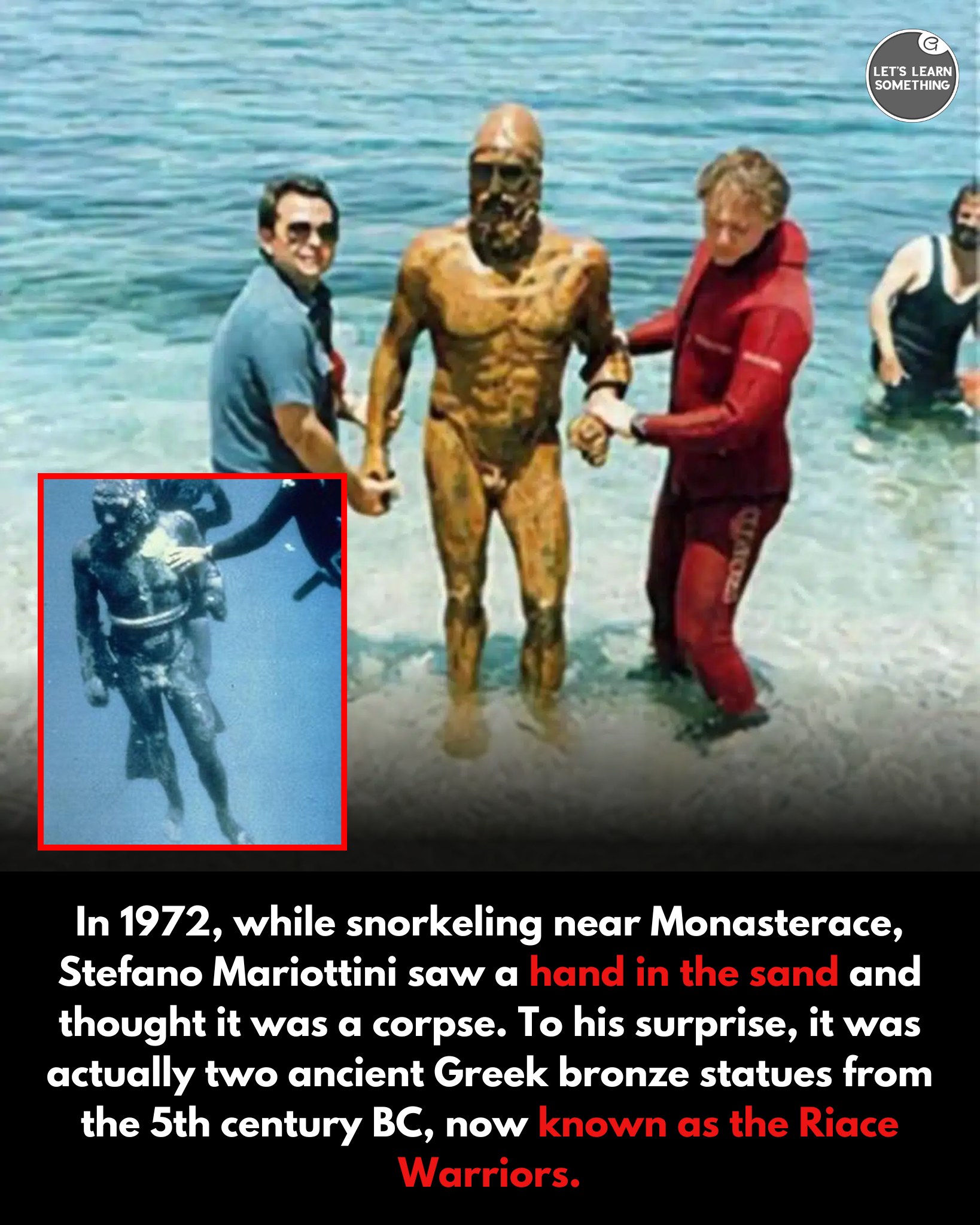
In 1972, the history books got a stunning update, all thanks to one Italian chemist named Stefano Mariottini. While enjoying a casual snorkeling trip near Monasterace in southern Italy, Mariottini spotted something unsettling partially buried on the seabed: what looked like a human hand protruding from the sand. His initial thought—that he had stumbled upon a corpse—quickly gave way to one of the most significant archaeological finds of the 20th century.
What Mariottini actually discovered were two magnificent, life-sized ancient Greek bronze statues. These weren’t just any relics; they were two exceptionally preserved sculptures, now universally known as the Riace Warriors (or Bronzi di Riace). Dating back to the 5th century BC, the statues are masterful examples of the Classical Greek style—a period considered the zenith of Greek art and sculpture.
For our generation, who may have studied classical history in school or traveled to see ancient ruins, this discovery is particularly fascinating. Finding such pristine statues on land is rare enough; pulling them from the bottom of the Ionian Sea, where they’ve been protected from human interference for over two millennia, is nothing short of miraculous.
The Riace Warriors are distinguished by their incredible detail: coiled hair, silver eyelashes, copper lips, and muscular, dynamic poses that capture the ideal of the heroic ancient male. Their discovery remains a potent reminder that history isn’t static—it’s waiting, often just beneath the surface, to be found. Stefano Mariottini’s keen eye turned a moment of potential alarm into an enduring legacy, forever changing our understanding of Greek artistry.