












Now Reading: Most of Earth’s Oxygen Doesn’t Come From Trees — It Comes From the Ocean
-
01
Most of Earth’s Oxygen Doesn’t Come From Trees — It Comes From the Ocean

Most of Earth’s Oxygen Doesn’t Come From Trees — It Comes From the Ocean
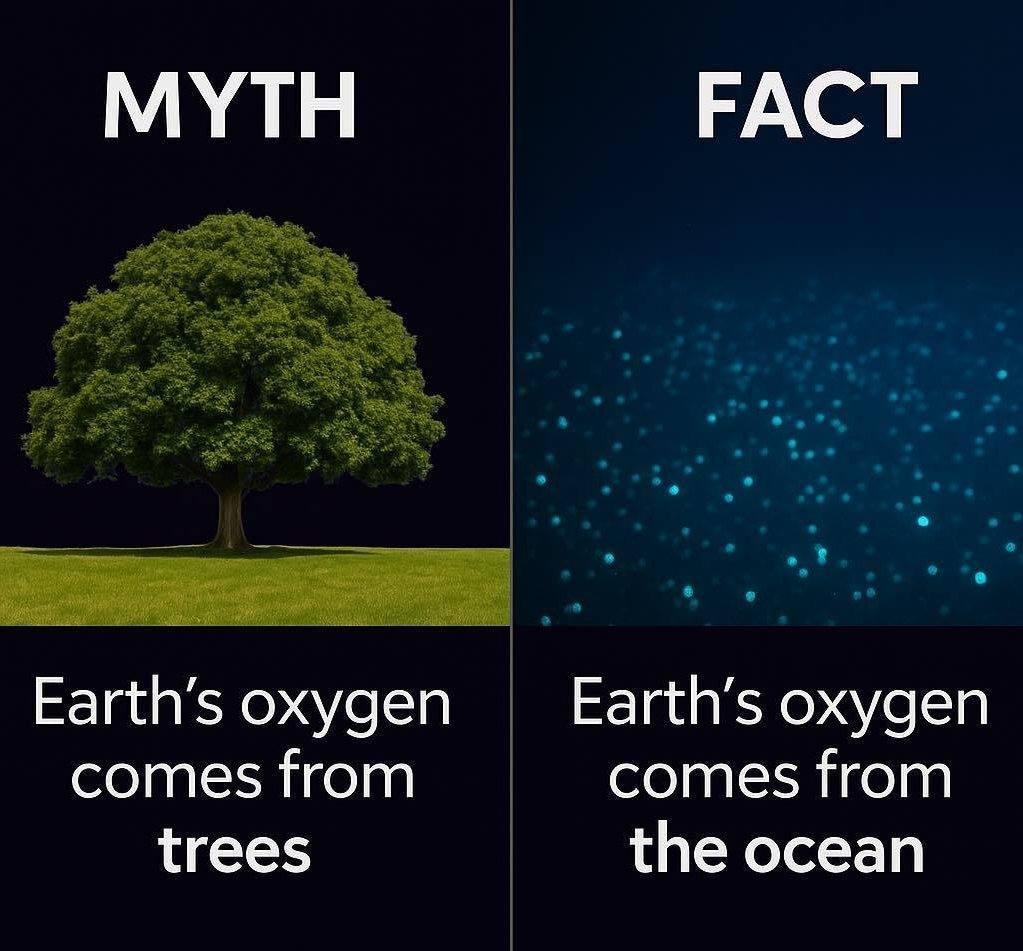
For years, we’ve heard rainforests described as the “lungs of the Earth.” While forests are crucial for balancing our climate and storing carbon, they aren’t the primary source of the oxygen we breathe.
Scientists estimate that forests — including the Amazon — provide about 28% of the world’s oxygen. The real, often overlooked champions are much smaller and harder to see: phytoplankton.
These microscopic organisms drift near the surface of the ocean, using sunlight to photosynthesize just like plants on land. In doing so, they generate at least half of the oxygen in Earth’s atmosphere. Every other breath we take is thanks to the invisible life teeming in the seas.
It’s also important to remember that today’s atmosphere is the result of hundreds of millions of years of oxygen production — first by ancient marine life, and later by land plants.
So, the next time you pause for a deep breath, think beyond the trees. Our planet’s greatest oxygen factory isn’t green — it’s blue.