When my husband Mark and I bought the lot next door and built our home, we expected a quiet life. The land had belonged to Mrs. Harper, a reclusive older woman who lived alone in the weathered house beside ours.
From the start, she was odd — she avoided conversation, peeked from behind her curtains, and carried an air of secrecy. I usually dismissed it as small-town gossip, though Mark insisted there was more to her story. “People say her husband died under strange circumstances,” he told me one night over dinner.
I rolled my eyes. “That’s probably just rumors. She’s harmless.” But deep down, even I couldn’t shake the uneasy feeling that lingered whenever I caught her watching us.
One afternoon, while home sick, everything changed. I was lying on the couch when our dog, Max, started growling at the window. I pushed myself up groggily and froze.
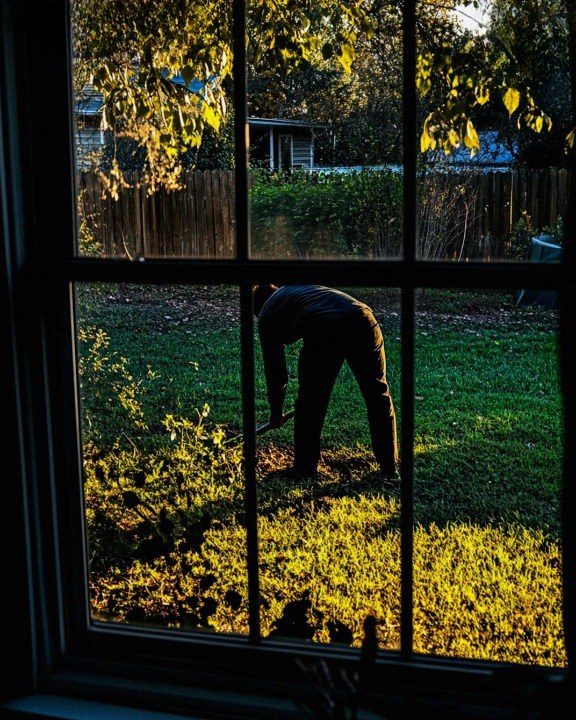
There was Mrs. Harper, slipping into our yard with a small shovel clutched in her hands. She went straight to the oak tree — the very spot Max always seemed obsessed with — and started digging.
Adrenaline replaced my exhaustion. I stormed outside. “Mrs.
Harper!” I shouted. She froze, shovel half-buried in the soil, then turned to me with a pale, stricken face. “I-I wasn’t—” she stammered.
“You weren’t what?” I demanded. “That’s our property. What are you doing?”
Her hands trembled as she crouched and pulled a filthy, weathered bag from the ground.
It rattled faintly as she lifted it, and when she opened it, I gasped. Inside were old pieces of jewelry — gleaming gold, glittering stones, all encrusted with dirt but clearly valuable. “My husband found these years ago,” she whispered.
“He used to spend hours with his metal detector in the woods. One day… he struck gold, or so he thought. We believed it was treasure, maybe even ancient.”
She explained how their lives had spiraled after that discovery.
Word must have gotten out, because strangers started showing up, asking questions, snooping around. Her husband grew paranoid, hiding the stash in our yard before the stress consumed him. “It killed him, April,” she said, clutching the bag to her chest.
“And ever since, I’ve been living in fear — waiting for someone to come and take it.”
Her confession chilled me. Years of isolation, mistrust, and grief, all tied to what she believed was priceless treasure. “You can’t live like this anymore,” I told her softly.
“Maybe it’s time to let it go. Donate it, hand it over to a museum. Stop letting it haunt you.”
A few days later, I stood beside her in the back office of the local museum, watching as an appraiser examined the items under bright lights.
We waited in silence until he finally looked up. “I’m afraid these aren’t real,” he said. “The gold is a cheap alloy, and the diamonds are glass.
Very convincing fakes, but worthless nonetheless.”
We both stared at him, stunned. After a long silence, I started to laugh — uncontrollably, almost hysterically. Mrs.
Harper joined in, at first hesitant, then with full-bodied relief. Years of secrecy, fear, and grief — all over counterfeits. The absurdity was overwhelming, but also freeing.
As we left the museum, Mrs. Harper seemed lighter, almost glowing. “Thank you, April,” she said, her voice steadier than I’d ever heard it.
I smiled and slipped my arm through hers. “Come on. I’ve got a bottle of wine waiting at home.
I think we both deserve a glass.”
And just like that, the weight she’d carried for years finally seemed to lift.