












Now Reading: Principle Over Profit: Why VLC’s Creator Chose Open-Source Over Riches
-
01
Principle Over Profit: Why VLC’s Creator Chose Open-Source Over Riches

Principle Over Profit: Why VLC’s Creator Chose Open-Source Over Riches
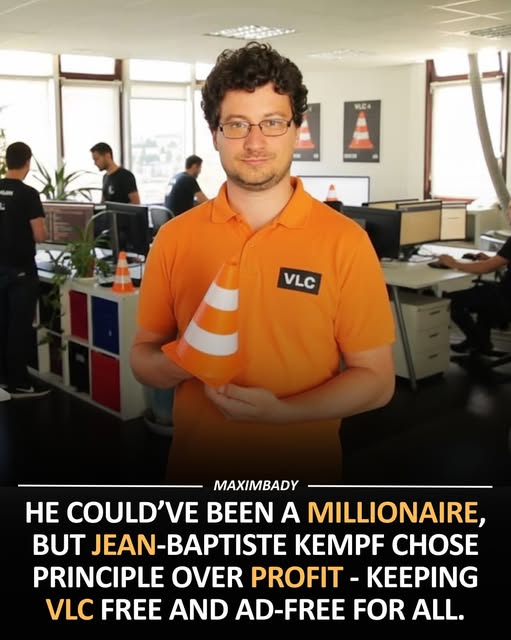
In an era where digital services often come with a price tag or a barrage of advertisements, the story of Jean-Baptiste Kempf and VLC Media Player stands as a testament to principle over profit. A recent image circulating online features Kempf, a key figure behind the ubiquitous VLC, holding a small traffic cone – the iconic logo of the media player – with a caption highlighting his decision to keep VLC free and ad-free. This image has sparked renewed appreciation for a choice that many believe defines the spirit of open-source and user-centric development.
Kempf, an instrumental developer in the VideoLAN project, could have easily steered VLC towards a lucrative commercial model. With millions of users worldwide relying on VLC for its versatility in playing virtually any media format, the potential for generating substantial revenue through subscriptions, premium features, or integrated advertising was immense. Many software companies dream of such a captive audience. However, Kempf and the VideoLAN team chose a different path, prioritizing accessibility and user experience above financial gain.
This decision resonates deeply with the ethos of the open-source community, where collaboration, transparency, and freedom are paramount. By keeping VLC free and open-source, they ensured that it remains available to everyone, regardless of their economic status, and that its development can be continually improved upon by a global community of developers. This commitment has fostered a level of trust and loyalty rarely seen in the tech industry.
The impact of this choice extends beyond just avoiding annoying ads or paywalls. It empowers users, giving them full control over their media consumption without hidden agendas or data mining. In a digital landscape increasingly dominated by walled gardens and monetization strategies, VLC stands as a refreshing anomaly – a powerful tool freely given, embodying the ideal of technology serving humanity rather than the other way around. Kempf’s choice is a powerful reminder that sometimes, the greatest value isn’t measured in dollars, but in principle and widespread benefit.