













Now Reading: Queen Nzinga: The Woman Who Refused to Kneel
-
01
Queen Nzinga: The Woman Who Refused to Kneel

Queen Nzinga: The Woman Who Refused to Kneel
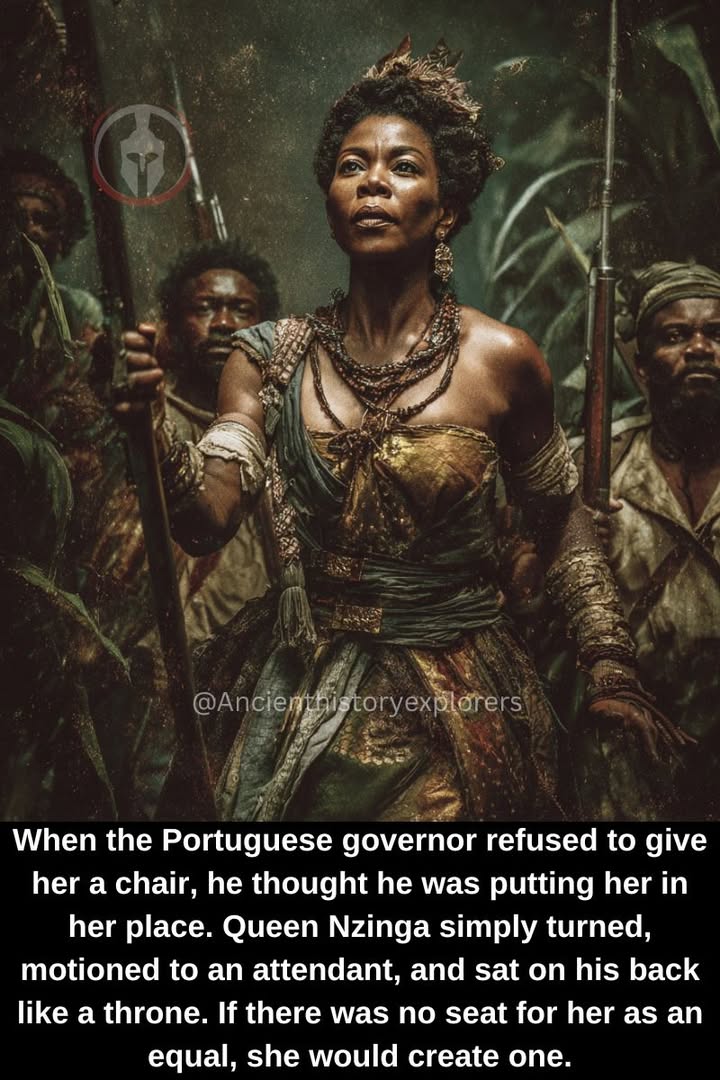
In 1622, a delegation from the Kingdom of Ndongo entered the governor’s hall in Luanda, Angola. At the center was Nzinga Mbande, a princess whose diplomatic brilliance would soon make her the most formidable obstacle to Portuguese colonial expansion.
The Power of the “Human Chair”
The meeting was designed as an act of psychological warfare. The Portuguese governor sat on an elevated throne, purposely providing no chair for Nzinga. He expected her to sit on a low floor mat, a gesture that would visually signal her submission to European authority.
Nzinga, however, understood that in diplomacy, perception is power. Refusing to be diminished, she signaled to an attendant who dropped to his hands and knees. Nzinga sat upon his back, maintaining a straight spine and level eye contact with the governor. This “human chair” was not merely a clever solution; it was a defiant statement of sovereignty. She negotiated as an equal, making it clear that she would never be a subordinate.
A Warrior Queen’s Legacy
When diplomacy reached its limits, Nzinga turned to the battlefield. For decades, she waged a relentless guerrilla campaign against the Portuguese. Her strategy was multifaceted: she forged alliances with neighboring African groups, welcomed runaway slaves into her ranks, and utilized the rugged terrain of the interior to stall colonial progress.
She was a tactical chameleon—one day a sophisticated negotiator in European attire, the next a warrior queen leading ambushes from the forest. By the time she died in 1663 at the age of eighty, she had successfully maintained the independence of the kingdoms of Ndongo and Matamba for most of her life. Queen Nzinga remains a towering symbol of resistance; she proved that when an empire attempts to lower a leader, the truly powerful simply find a way to elevate themselves.