













Now Reading: Sweet Defenses: How Beehive Fences are Saving Kenyan Harvests
-
01
Sweet Defenses: How Beehive Fences are Saving Kenyan Harvests

Sweet Defenses: How Beehive Fences are Saving Kenyan Harvests
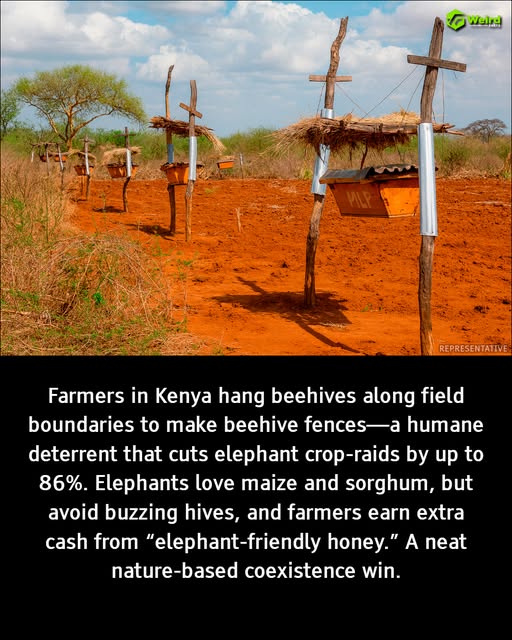
For many farmers living on the fringes of Kenya’s protected wilderness, the majestic African elephant has long been viewed with a mixture of awe and economic dread. A single night of “crop raiding” by a hungry herd can wipe out a year’s worth of maize and vegetables, leaving families in financial ruin. However, a decade-long initiative near Tsavo East National Park is proving that the solution to this giant problem comes in a very small, buzzing package.
The Science of the “Buzzing Barrier”
The conflict between humans and wildlife has historically been a violent one, but Kenyan farmers are now turning to beehive fences—a humane, nature-based deterrent. The system is elegantly simple: a series of beehives are hung from grease-covered posts at ten-meter intervals and connected by a sturdy tension wire.
When an elephant attempts to enter the field, it trips the wire, causing the hives to shake. The resulting swarm and the distinct sound of thousands of bees are enough to send even the largest bull elephant into a retreat. Research conducted over nine years has confirmed the staggering success of this method:
-
Effectiveness: Crop raids were reduced by up to 86.3% during peak harvest seasons.
-
Sensitivity: Elephants are naturally terrified of bee stings on sensitive areas like their trunks and around their eyes.
A “Double Harvest” for Local Communities
Beyond crop protection, the fences have created a brand-new economy for rural households. Farmers are now doubling as beekeepers, harvesting and selling what has been branded as “elephant-friendly honey.” This provides a crucial secondary income stream, turning a former pest-control measure into a profitable enterprise.
“It’s a smart way to foster peaceful coexistence,” noted one local researcher. “We aren’t just protecting the maize; we are changing how the community perceives the elephant—from a threat to a partner in a sustainable ecosystem.”
Challenges on the Horizon
Despite the success, the system is not without its vulnerabilities. The effectiveness of the fences is intrinsically tied to the health of the bee colonies. During periods of severe drought, bee activity naturally declines, and hives may even be abandoned, leaving the “fences” silent and the crops exposed once more.
As climate patterns become more unpredictable, conservationists are looking for ways to supplement the bees’ water and food sources to ensure this peaceful coexistence remains a permanent fixture of the Kenyan landscape.