













Now Reading: The Beauty That Beat the Law: The Scandalous Trial of Phryne
-
01
The Beauty That Beat the Law: The Scandalous Trial of Phryne

The Beauty That Beat the Law: The Scandalous Trial of Phryne
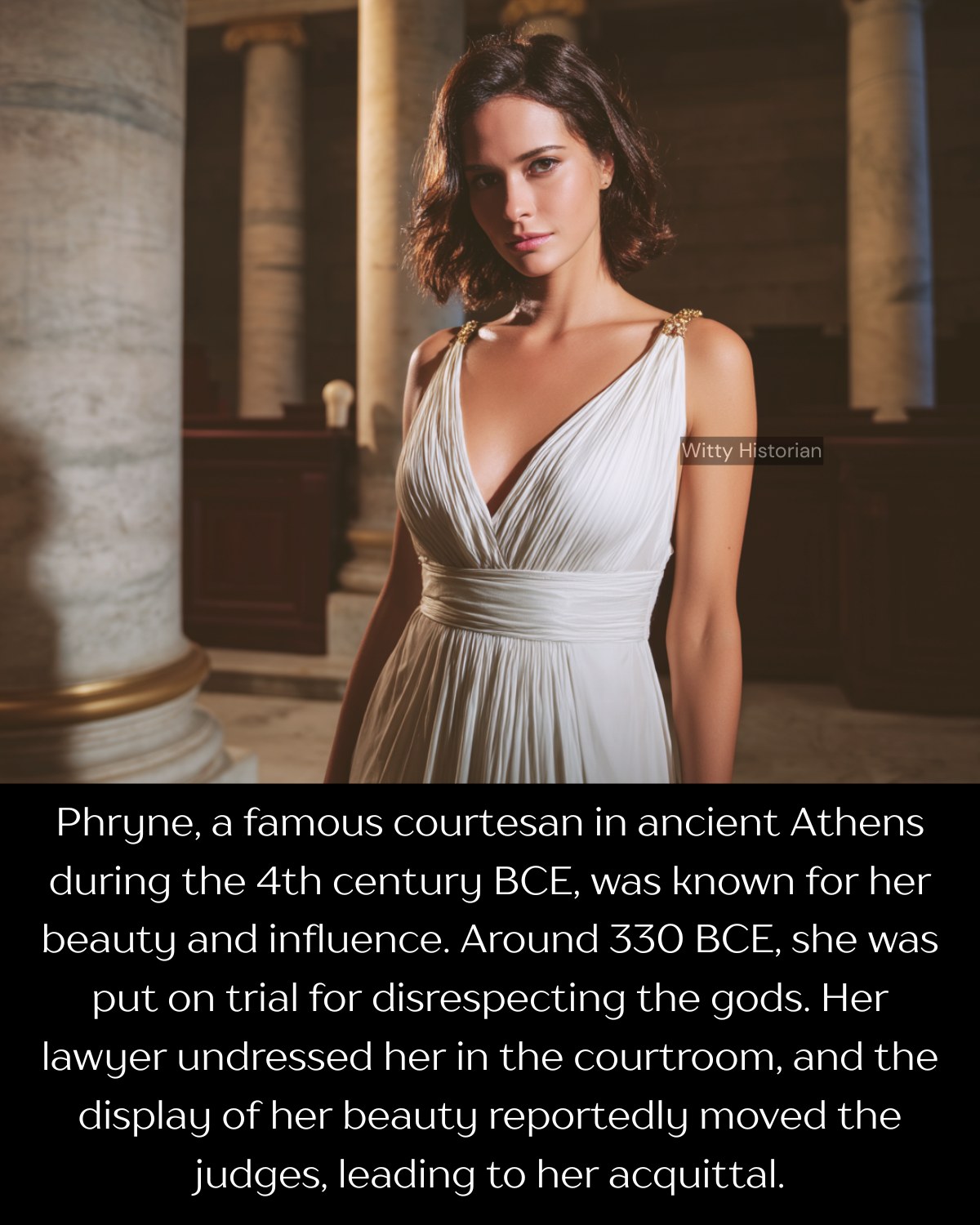
In ancient Athens, during the 4th century BCE, there was no figure more captivating than Phryne. Born as Mnēsarista, she was one of the most famous courtesans (hetairai), known for her staggering beauty and immense influence in elite society. She became the muse for the era’s most renowned artists, notably the sculptor Praxiteles, whose famous statue of Aphrodite was modeled after her.
Phryne was a true symbol of luxury and power, using her wealth and connections to wield considerable sway over Athenian political and artistic life.
Accused of Impiety
In 330 BCE, Phryne faced a deadly threat: she was accused of impiety, a capital offense (punishable by death) in ancient Athens. She was brought before a jury for disrespecting the gods.
Instead of relying on dry legal arguments, her lawyer, the famous orator Hypereides, opted for a strategy so bold it became legendary.
The Power of Spectacle
During the height of the trial, Hypereides made a stunning move: he had Phryne undress before the assembled judges.
Her sheer, unmatched physical beauty was said to have stunned the court into silence. The judges were so moved by her appearance that they were convinced a person of such divine beauty could not possibly be guilty of disrespecting the gods. She was acquitted on the spot.
This shocking moment showcased the unique power of beauty and spectacle in the ancient world, demonstrating how charisma and physical appearance could literally determine life and death.
Phryne’s story remains a fascinating look at the complex role powerful women held in Greek society and how their influence could bend the course of justice.
Does this account of ancient Greek legal history spark your interest in learning about other powerful women from the classical era?