








Now Reading: The Case of the Missing 75 Cents: The Real-Life Cyber-Spy Thriller of the Cold War
-
01
The Case of the Missing 75 Cents: The Real-Life Cyber-Spy Thriller of the Cold War

The Case of the Missing 75 Cents: The Real-Life Cyber-Spy Thriller of the Cold War
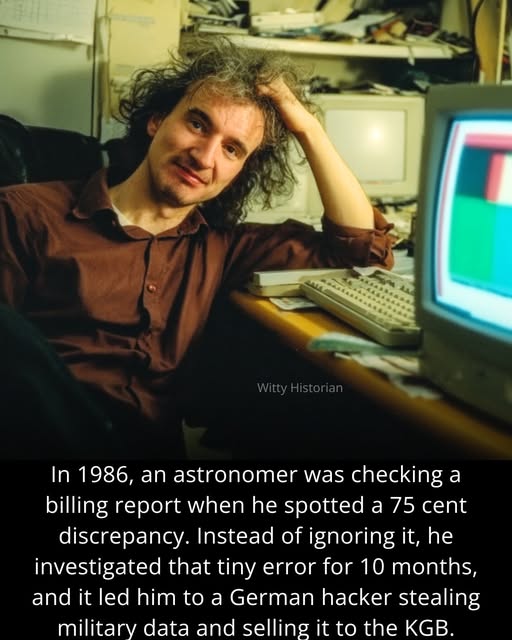
In 1986, long before “cybersecurity” was a household word, a real-life spy thriller began not with a bang, but with a baffling account ledger.
Clifford Stoll, an astronomer at Lawrence Berkeley Laboratory, was performing a routine check when he spotted an anomaly: a mere 75 cents in computer time fees was missing. It was a sum most people would dismiss as a harmless accounting error. But something about that tiny, missing amount nagged at him. Stoll’s refusal to ignore that small detail launched him into a ten-month investigation that captivated the U.S. intelligence community.
From Ledger to Logins
That 75 cents was the thread that unraveled a massive espionage plot.
Digging through login records and network trails, Stoll quickly realized this wasn’t an innocent glitch. Someone was skillfully slipping past the lab’s defenses, quietly penetrating American research networks. The deeper he went, the clearer the picture became: the intruder was not a student, but a sophisticated German hacker selling stolen data, including sensitive information from U.S. military systems, directly to the KGB.
This was the Cold War being fought on phone lines and computer screens.
A True American Hero
Stoll, who had no formal background in cyber-sleuthing, became an accidental pioneer. He built homemade monitoring traps and painstakingly traced connections one phone call at a time. His tenacity eventually exposed the entire ring, allowing authorities to shut down the operation and prevent further damage.
The biggest lesson from this classic American tale? Never underestimate the power of curiosity and the importance of paying attention to the details, no matter how small. A single missing 75 cents saved the country from a major security breach.
Would you like to hear more stories about early computer history?