












Now Reading: The Day the Sky Fell: Nebraska’s Unforgettable Locust Plague of 1875
-
01
The Day the Sky Fell: Nebraska’s Unforgettable Locust Plague of 1875

The Day the Sky Fell: Nebraska’s Unforgettable Locust Plague of 1875
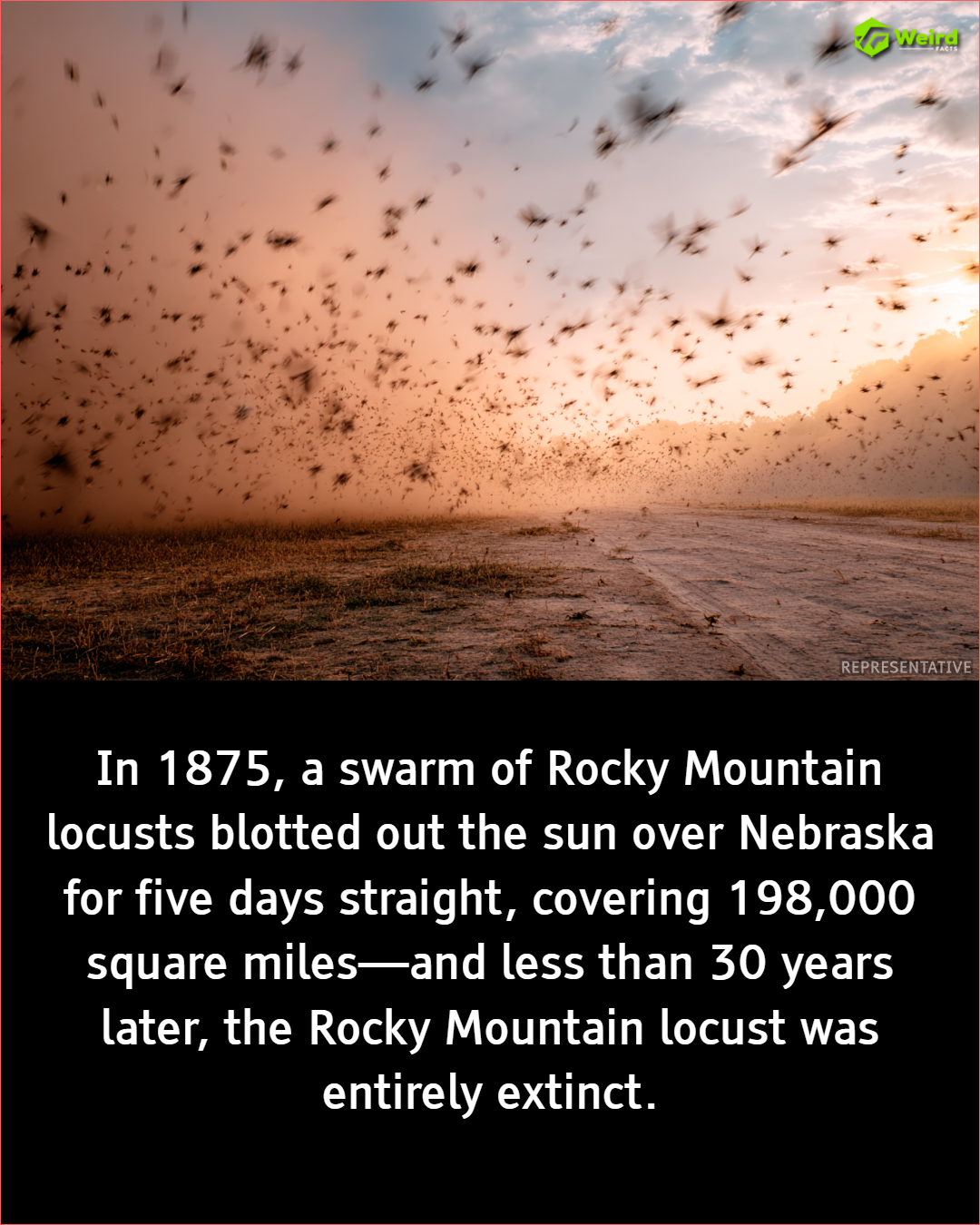
The image of countless insects swarming across a hazy sky perfectly illustrates a truly astonishing and terrifying historical event: the 1875 Rocky Mountain locust invasion over Nebraska. The accompanying text reveals a spectacle of nature almost too grand to imagine – a swarm so immense it blotted out the sun for five days straight, covering an astonishing 198,000 square miles.
This wasn’t just a large gathering of insects; it was a biological phenomenon of biblical proportions. Eyewitnesses described the sky darkening, the air filling with the rustling sound of wings, and the ground becoming a shifting carpet of locusts. Farmers watched helplessly as their crops, their livelihoods, and their very hope for the future were devoured in a matter of hours. The sheer scale of this single event is difficult to comprehend, representing perhaps the largest insect swarm ever recorded.
What makes this story even more incredible is the astonishing follow-up: less than 30 years later, the Rocky Mountain locust was entirely extinct. A species that could number in the trillions and darken skies across states simply vanished. While the exact reasons for its sudden disappearance are still debated, habitat destruction due to agricultural expansion and changes to their breeding grounds are believed to have played a significant role.
The 1875 locust plague stands as a powerful reminder of nature’s awe-inspiring, sometimes terrifying, power and the delicate balance of ecosystems. It’s a tale of a living phenomenon that defied belief, leaving an indelible mark on history before disappearing as mysteriously as it arrived.