







Now Reading: The Genetic Ghost: How Viking Raids Built Iceland
-
01
The Genetic Ghost: How Viking Raids Built Iceland

The Genetic Ghost: How Viking Raids Built Iceland
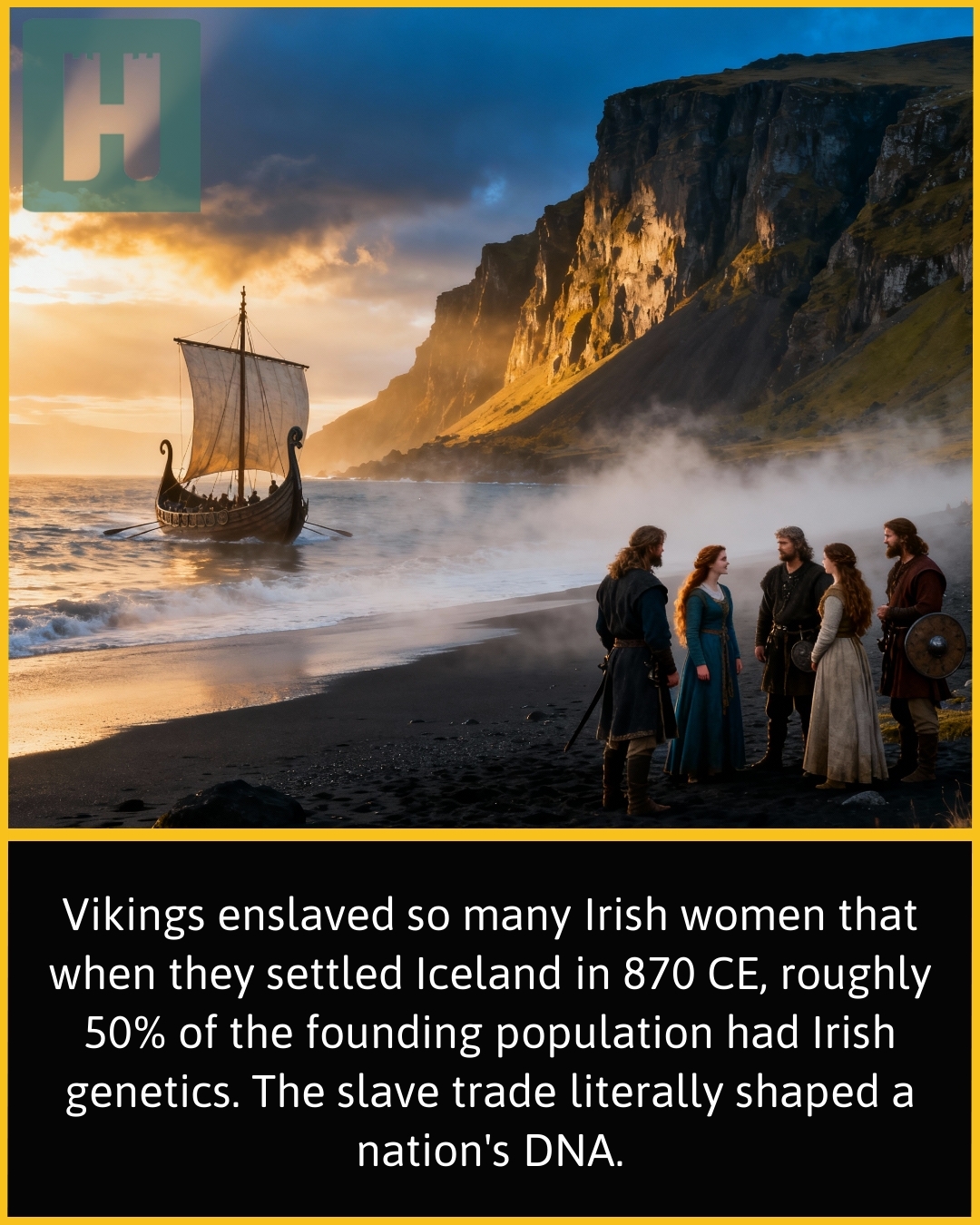
The popular image of a Viking raid usually involves burning monasteries and stolen gold. However, when the Norse longships landed on Irish shores during the 9th and 10th centuries, their most valuable cargo wasn’t metal—it was people.
A Massive Demographic Shift
The scale of these raids was staggering. Vikings established “longphorts” (ship camps) along the Irish coast, which eventually grew into major trading hubs like Dublin. These ports became the center of a massive slave trade network. Thousands of Irish men and women were captured and forced onto ships, destined for a new life in the North Atlantic.
What happened next created one of the most unique demographic footprints in history. As the Vikings settled the uninhabited island of Iceland, they didn’t just bring their families from Norway; they brought their captives from Ireland.
The DNA Evidence
For centuries, Icelanders were thought to be almost purely of Norse descent. However, modern genetic testing has revealed a different story. Genomic studies of the modern Icelandic population show a fascinating split: while the paternal (male) ancestry is approximately 80% Scandinavian, the maternal (female) ancestry is roughly 62% Gaelic (Irish and Scottish).
This genetic data acts as a biological record of the Viking Age. It confirms that the founding population of Iceland was a hybrid society—a mix of Norse explorers and the Celtic women they took from the British Isles.
A Lasting Legacy
This “genetic destiny” influenced everything from Icelandic folklore to the physical appearance of the population. The blending of these two cultures, though born from the violence of slavery, eventually merged into a single national identity. Today, the blood of ancient Irish captives still flows through the veins of nearly every Icelander, serving as a silent, living monument to a forgotten chapter of the Viking Age.