













Now Reading: The Prisoner Who Came Back: The Extraordinary Integrity of Robert Campbell
-
01
The Prisoner Who Came Back: The Extraordinary Integrity of Robert Campbell

The Prisoner Who Came Back: The Extraordinary Integrity of Robert Campbell
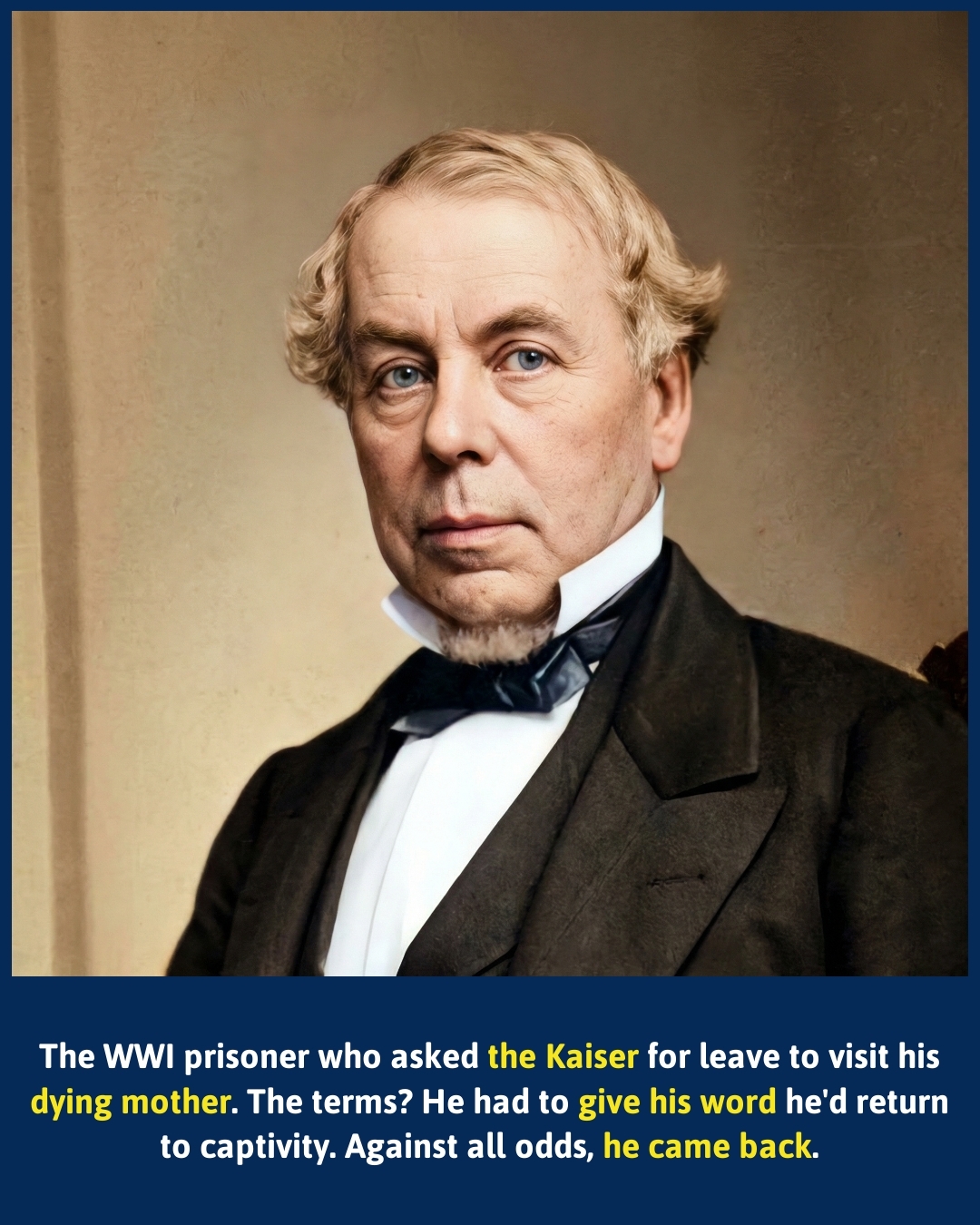
Germany, 1914. The clang of iron gates at a prisoner-of-war camp marked the end of freedom for British Captain Robert Campbell. Captured on the Western Front during the opening weeks of World War I, he was severed from his regiment and his home, relegated to the stagnant life of a captive where the only connection to the outside world was the slow trickle of censored mail.
Among those letters, one arrived with the weight of a death sentence: his mother was dying. Back in England, beyond the reach of a prisoner, her life was ebbing away. In an era defined by the brutal machinery of total war, Campbell faced an impossible wall of barbed wire and bureaucracy. Most would have succumbed to despair, but Campbell chose a path of staggering audacity.
He wrote directly to Kaiser Wilhelm II. The request was simple yet unheard of: he asked for temporary leave to visit his mother’s bedside. He offered no political leverage or tactical information. He offered only his word—the “sacred oath” of an officer—that if allowed to go, he would return to German soil to resume his captivity.
In a moment of unexpected humanity, the Kaiser agreed. Without guards, chains, or escorts, Campbell was released on his word alone. He navigated the chaos of a continent at war, crossed the Channel, and reached his family home. He spent a week at his mother’s bedside, holding her hand and saying the final goodbyes that war usually steals.
When the week ended, Campbell stood at a crossroads. He was in England. He was free. He could have easily disappeared, joined a new regiment, or simply refused to return to an enemy camp. To many, returning to prison during a world war seemed like madness. But to Campbell, the promise was the man.
He boarded a boat, traveled back through neutral territory, and walked back up to the gates of the German camp. His captors were stunned; his fellow prisoners were incredulous. In a conflict where treaties were being treated as “scraps of paper” and millions were dying for the sake of shifting borders, Campbell’s voluntary return was a radical act of individual honor.
Robert Campbell survived the war and was eventually released in 1918. While his name is not found in most history textbooks, his story remains a powerful testament to the idea that integrity can survive even when the world is burning. He proved that even in the darkest hour of the twentieth century, a man’s word could still be the strongest bond on earth.