












Now Reading: The Steel of Sacrifice: How Giving Up Corsets Helped Win WWI
-
01
The Steel of Sacrifice: How Giving Up Corsets Helped Win WWI

The Steel of Sacrifice: How Giving Up Corsets Helped Win WWI
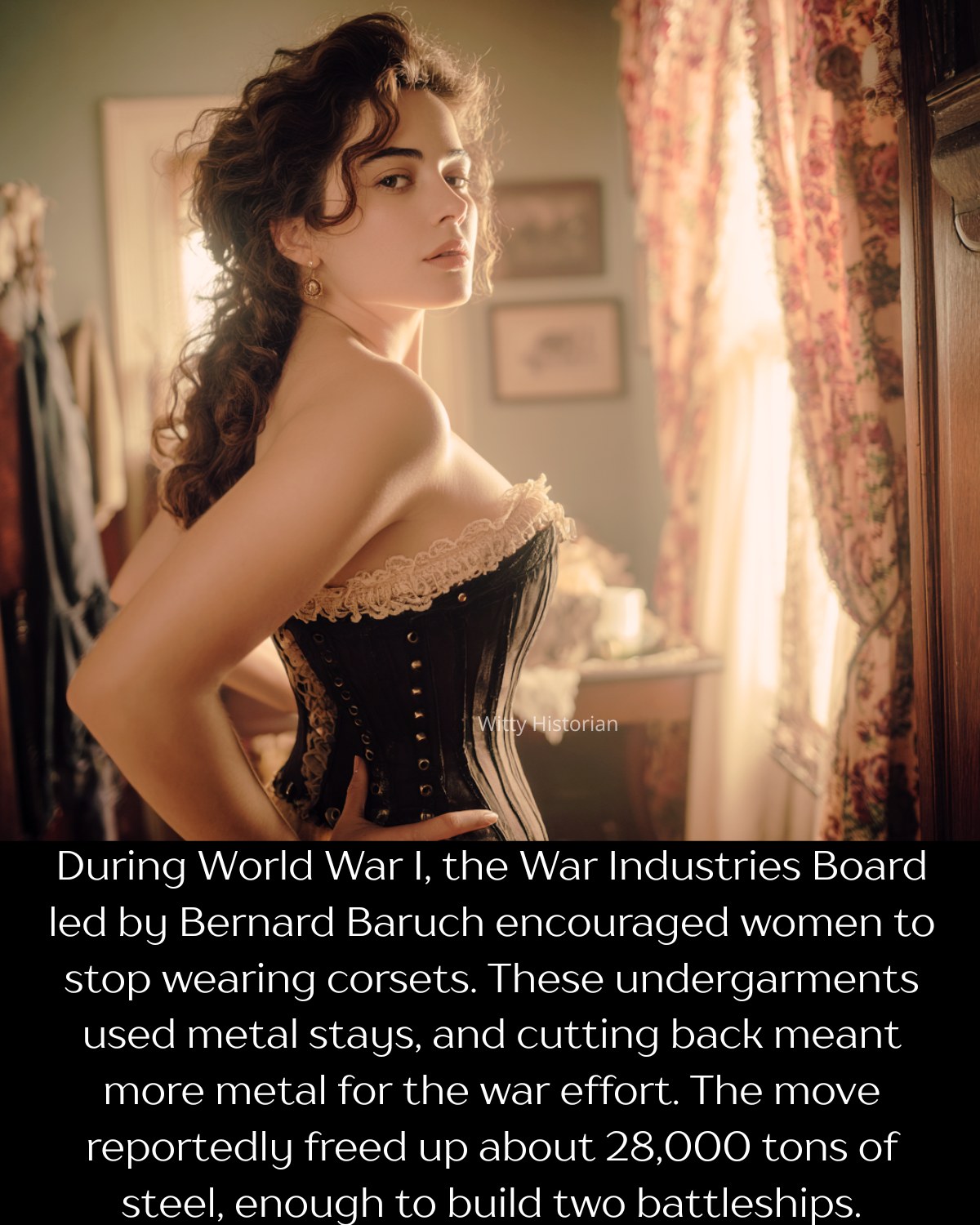
During World War I, the demand for war materials was so intense that even fashion found itself on the frontlines.
The U.S. War Industries Board, headed by Bernard Baruch, recognized an unlikely source of essential material: the traditional steel stays used to stiffen women’s corsets. In a massive national appeal, the Board urged American women to abandon these restrictive garments for the duration of the war.
A Shift in Steel and Style
What seemed like a simple, personal change in clothing yielded astonishing practical results for the war effort.
By collectively giving up their corsets, American women freed up an estimated 28,000 tons of steel. This was not a minor amount; it was enough steel to construct two full battleships!
This remarkable contribution proved that the home front was just as vital as the trenches. Women’s willingness to make this sacrifice directly translated into critical firepower for the U.S. military.
The Birth of Modern Freedom
The impact of this fashion sacrifice wasn’t just practical—it was also cultural. The enforced move away from the tightly bound, rigid silhouette of the past became a permanent change. Women, having experienced the comfort and freedom of looser clothing, began a slow but decisive move toward the freer, more modern styles that defined the 1920s.
Women on the home front truly proved that sometimes, even changes in the wardrobe can shape the course of history.
Would you be interested in learning about other ways American civilians supported the WWI effort?