













Now Reading: The Three Christs of Ypsilanti: A Bizarre Experiment in Identity
-
01
The Three Christs of Ypsilanti: A Bizarre Experiment in Identity

The Three Christs of Ypsilanti: A Bizarre Experiment in Identity
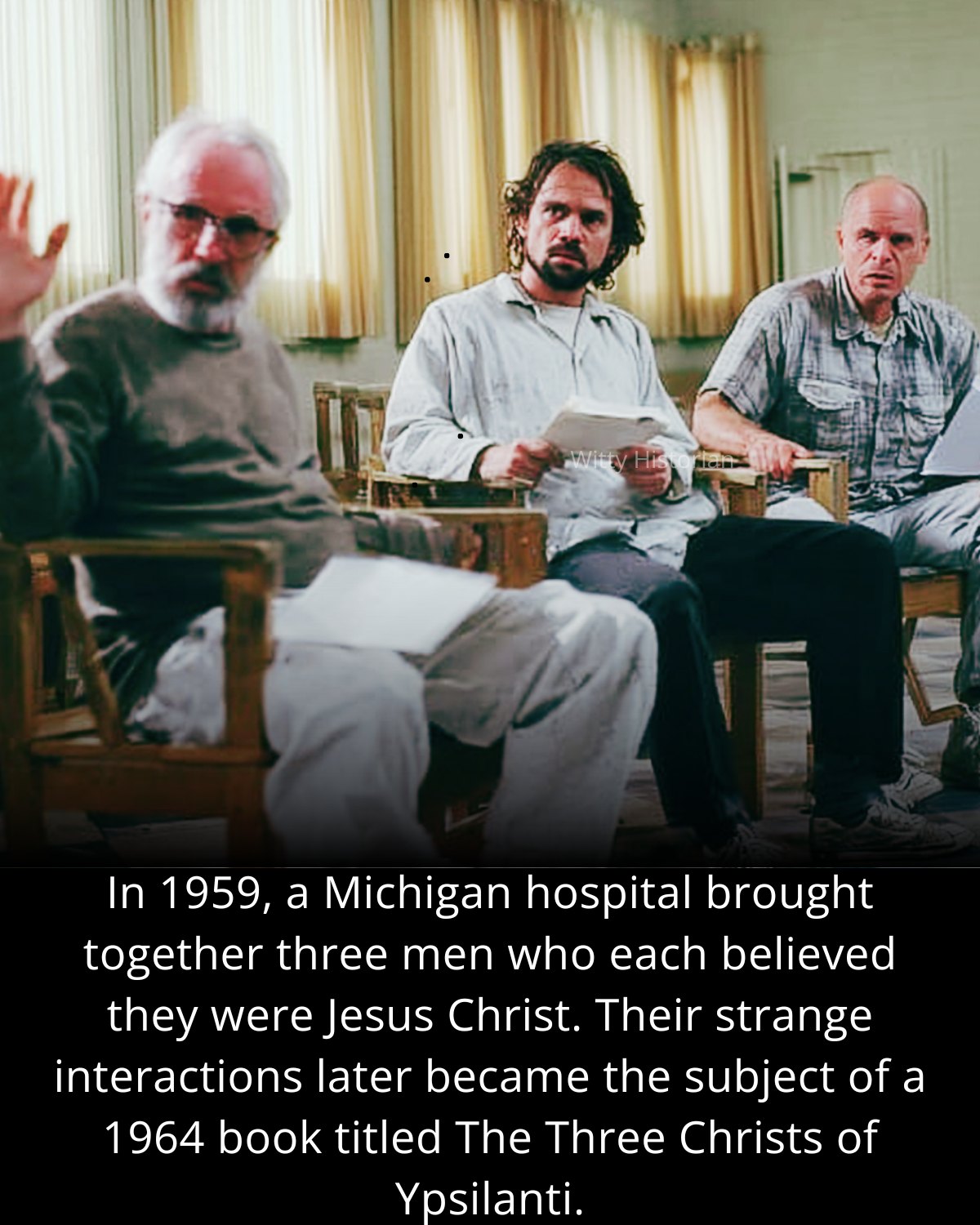
A psychiatric hospital in Ypsilanti, Michigan, became the unlikely stage for one of psychology’s most peculiar and controversial experiments. The study centered on the deeply held personal realities of three male patients, each suffering from the same unshakable delusion: each man was absolutely certain that he was Jesus Christ.
🤔 The Setup: A Test of Unshakeable Belief
The unusual situation presented a unique question to the hospital’s medical staff: what would happen if these three individuals, each convinced of his sole divine identity, were brought together and forced to confront their conflicting claims day after day?
The experiment involved arranging group therapy sessions where the three men sat together, discussed their identities, and challenged the veracity of the others’ stories. The resulting conversations, documented by staff, were a fascinating and often tense mix. Interactions reportedly ranged from calm, logical reasoning as each tried to prove his truth, to heated arguments as the men defended their roles as the true Messiah.
🛡️ Defending the Delusion: Reality vs. Confrontation
Contrary to the potential hope that direct confrontation would lead them to question or abandon their delusion, the men often displayed remarkable cognitive flexibility. Instead of changing their minds, they frequently created new and elaborate explanations to defend their claims, fitting the reality of the two “imposters” into their own belief system.
The sessions were described as a bizarre blend of confusion, unexpected logic, and even moments of dark humor. Ultimately, the experiment highlighted the powerful, resilient nature of personal reality and belief, demonstrating that these deeply ingrained convictions can persist even in the face of direct, constant contradiction.
📚 Documented for Posterity: The Work of Milton Rokeach
The unusual nature of the meetings drew significant attention, eventually capturing the interest of psychologist Milton Rokeach. Rokeach meticulously documented the entire interaction, transforming the bizarre case study into a major academic work.
In 1964, Rokeach published his findings in a book titled The Three Christs of Ypsilanti. The book captured the strange, sometimes uncomfortable, and often fascinating dynamic between the three men, cementing the experiment’s place as one of the most compelling and controversial case studies in the history of mental health research.