












Now Reading: The unexpected twist
-
01
The unexpected twist

The unexpected twist
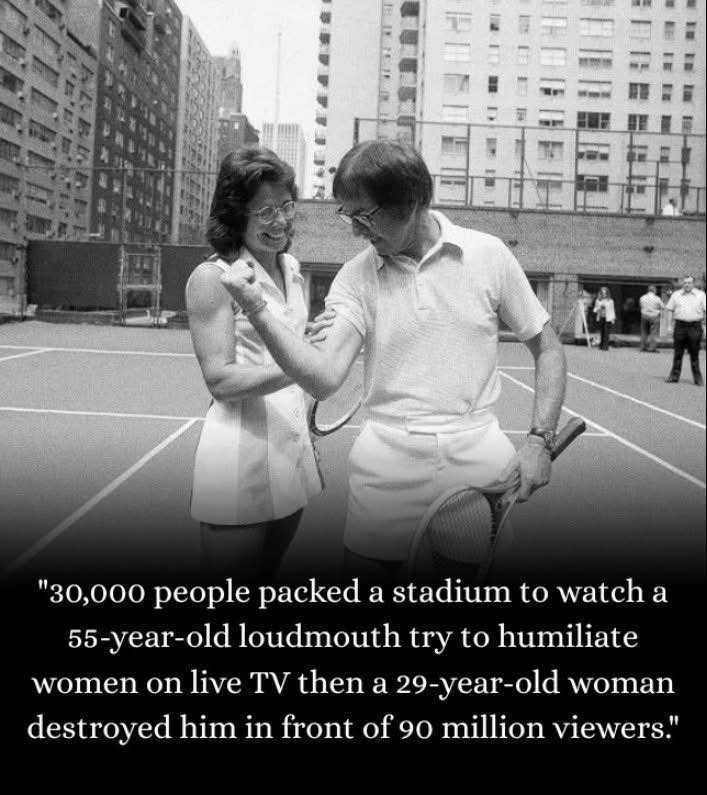
“The Night Billie Jean King Silenced a Loudmouth and Shifted the Power of Women’s Sports Forever”
30,000 people crammed into the Houston Astrodome that night—not for football, not for a concert, but to watch a 55-year-old self-proclaimed “male chauvinist pig” try to embarrass women on live TV.
Instead, 90 million viewers watched him get obliterated.
Bobby Riggs loved the spotlight, and he’d say anything to stay in it. “Women belong in the bedroom and the kitchen,” he bragged, promising he could beat any female player—even decades past his prime.
And after he crushed Margaret Court earlier that year, the headlines exploded. Commentators mocked Title IX. Women athletes felt humiliated. The progress they fought for looked like it might crumble under one man’s ego.
Then Billie Jean King stepped forward.
Twenty-nine years old. World No. 1. Fully aware that the match wasn’t just tennis—it was a referendum on women’s worth.
Friends warned her: “You can’t win this. If you beat him, people will blame his age. If you lose, they’ll blame every woman alive.”
She ignored them. She trained like her entire gender’s future depended on it—because it did.
On September 20, 1973, the Astrodome turned into the loudest battlefield in sports history. Riggs rolled in on a rickshaw pulled by women in skimpy outfits. King entered carried by male athletes like a queen making a point.
Then the match started… and she dismantled him.
Piece by piece. Shot by shot.
6–4. 6–3. 6–3. Straight sets. No mercy.
The stadium erupted. Millions of girls watching at home saw something electric: proof. Proof that they belonged in sports. That strength, talent, and excellence didn’t come with a Y chromosome.
King didn’t just win.
She rewired the conversation around women’s sports.
Title IX gained support. Sponsors poured money into women’s tennis. Girls picked up rackets, soccer balls, basketballs, and suddenly believed they could go all the way.
Bobby Riggs talked big.
Billie Jean King talked with her racket.
And the world listened.
She didn’t just change a match.
She changed the game—forever.