










Now Reading: The Unseen Legend: Pascal Cleatus Poolaw and the Price of Valor
-
01
The Unseen Legend: Pascal Cleatus Poolaw and the Price of Valor

The Unseen Legend: Pascal Cleatus Poolaw and the Price of Valor
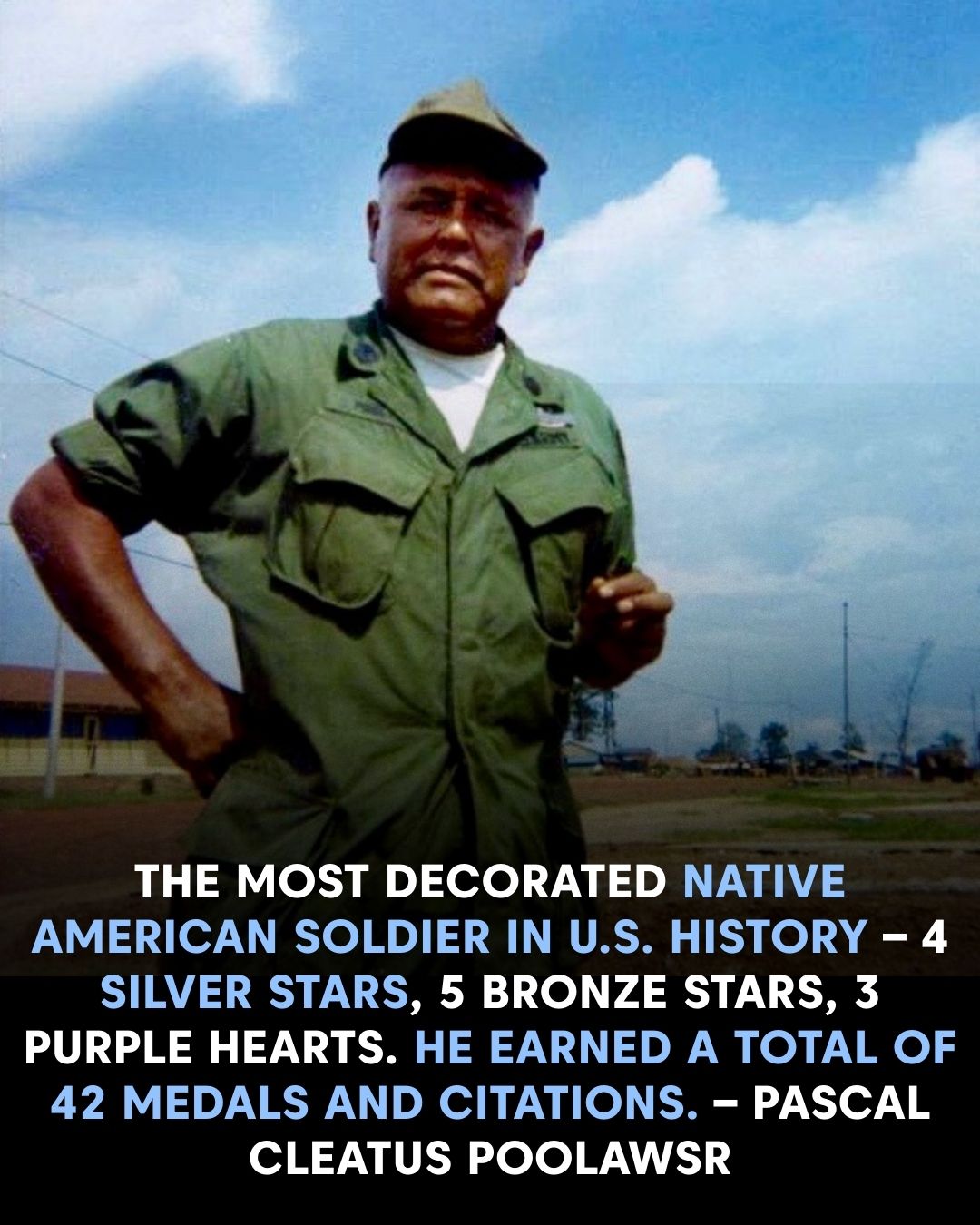
In the annals of American military history, certain names evoke immediate recognition—Patton, Eisenhower, MacArthur. Yet, one of the most decorated soldiers to ever wear the uniform remains largely invisible to the public eye. Pascal Cleatus Poolaw, a member of the Comanche Nation from Oklahoma, stands as a titan of courage whose legacy spans the bloodiest theaters of the 20th century.
Poolaw’s journey was defined by a relentless commitment to his comrades. During World War II, he served with distinction across Europe, navigating the chaos of major campaigns where the survival of a unit often rested on the shoulders of a few brave men. It was here that he earned a staggering array of honors, including the Distinguished Service Cross, the Silver Star, and the Bronze Star. Despite being wounded multiple times—earning several Purple Hearts—he refused to retreat, often putting himself in the direct line of fire to rescue fallen soldiers or complete critical missions.
What makes Poolaw’s story truly remarkable is his return to the front lines during the Korean War. Having already survived the horrors of the European front, he could have honorably stepped aside. Instead, his sense of duty led him back to the battlefield. In 1952, while leading his troops under a barrage of heavy enemy fire, Poolaw faced his final engagement. Even as he was mortally wounded, his leadership provided the backbone his unit needed to hold their position against overwhelming odds.
Poolaw’s sacrifice highlights a poignant and often overlooked chapter of American history: the extraordinary contribution of Native American service members. Despite facing systemic marginalization at home, Native Americans have historically served in the U.S. military at higher rates per capita than any other ethnic group. Poolaw was the embodiment of this warrior tradition—a leader who led not just with orders, but with action.
Today, historians and veterans’ organizations are fighting to ensure that Poolaw is no longer a footnote. His story is more than a list of medals; it is a testament to the fact that heroism often thrives in the quietest corners of history. To remember Pascal Cleatus Poolaw is to recognize that the strength of a nation is often built on the sacrifices of those it has too often forgotten.