










Now Reading: The White Feather: The Legendary Duel of Carlos Hathcock
-
01
The White Feather: The Legendary Duel of Carlos Hathcock

The White Feather: The Legendary Duel of Carlos Hathcock
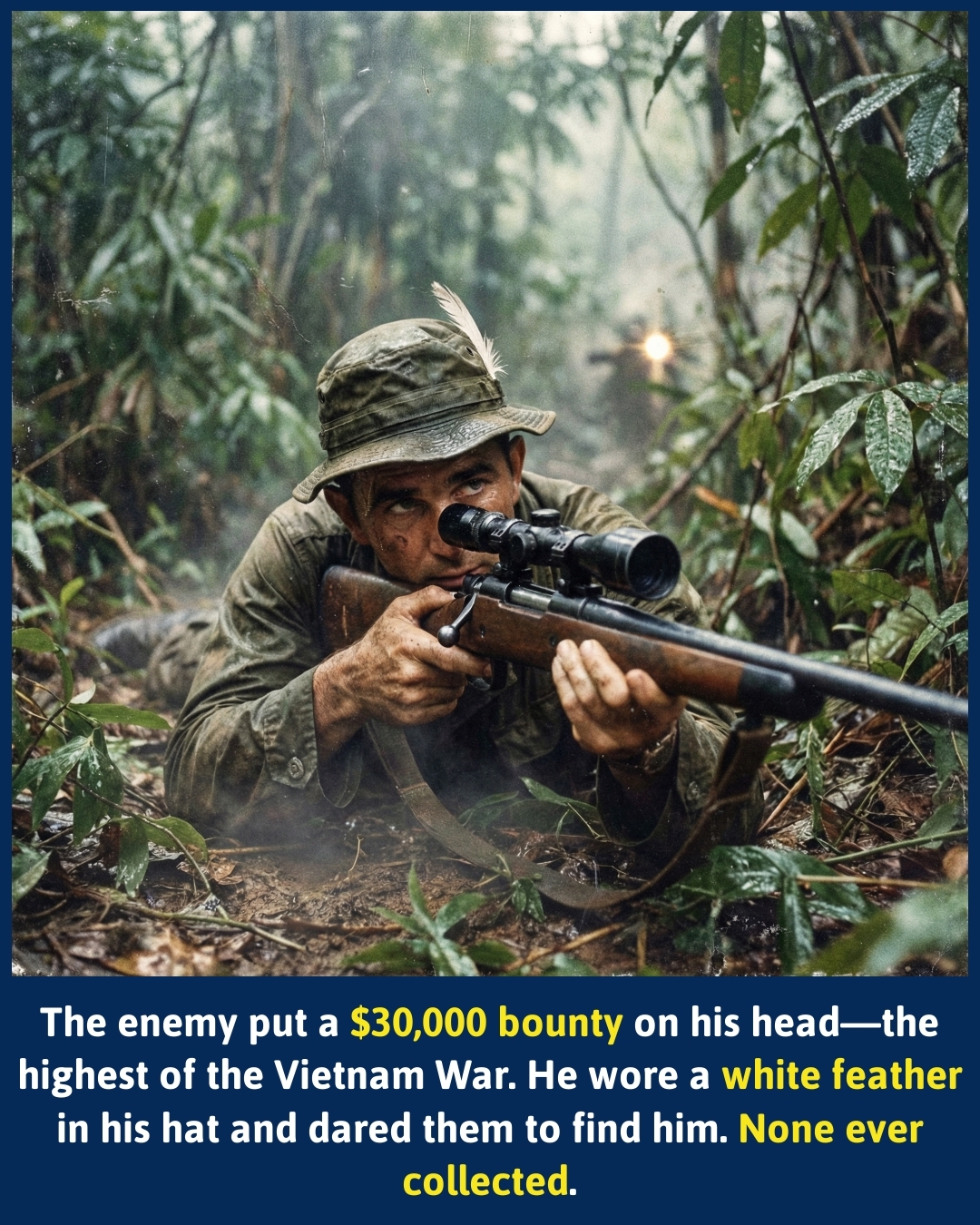
The Vietnam War was a conflict defined by dense jungles and invisible threats, but few stories from the brush are as chilling—or as cinematic—as the duel between Marine Gunnery Sergeant Carlos Hathcock and the North Vietnamese sniper known as “Cobra.” It was a high-stakes game of “hide and seek” where the penalty for losing was death, and the prize was survival.
The Hunt for the “Cobra”
The stakes became personal for Hathcock after Cobra killed a fellow Marine just outside his quarters. For days, the two elite marksmen stalked one another through the “green hell” of the Vietnamese wilderness. Every snapped twig or displaced leaf was a potential death sentence.
The tension peaked when Hathcock’s boot caught a fallen log, causing him to stumble. In that heartbeat, a shot rang out. Cobra had pulled the trigger. The bullet screamed past Hathcock’s head, missing him by a mere fraction of an inch and shattering his spotter’s canteen. It was a terrifyingly close brush with the end, but it also gave Hathcock the one thing he needed: the enemy’s general direction.
The Shot That Defied Physics
The duel ended when Cobra made a single, fatal mistake: he positioned himself facing the sun. Hathcock, peering through the undergrowth, caught a microscopic glint of light reflecting off glass. It was the lens of Cobra’s rifle scope.
Hathcock fired instantly. The round traveled the distance and performed what many considered a physical impossibility: it passed directly through Cobra’s scope and struck the sniper in the eye. Decades later, the legend was so pervasive that the show MythBusters dedicated an episode to testing the shot, ultimately confirming that under the exact right conditions, such a feat was indeed possible.
Lông Trắng: The White Feather
Hathcock’s reputation grew so formidable that the North Vietnamese Army placed a $30,000 bounty on his head—the highest ever offered for an American soldier during the war. To collect it, they sent their most decorated marksmen, yet Hathcock remained untouchable.
Perhaps most remarkably, Hathcock chose not to hide his identity. He famously wore a small white feather in his bush hat on every mission. It was a psychological taunt to the enemy—a bold signal that said, “Here I am. Come find me.” To the NVA, he became known as Lông Trắng (White Feather), a name that inspired both a massive manhunt and a deep, legendary fear.
A Legacy of Precision
Carlos Hathcock didn’t just survive the jungle; he redefined the art of long-range marksmanship. His story remains a cornerstone of military history, representing a unique blend of nerves of steel, incredible luck, and the unwavering discipline required to survive the world’s most dangerous game.