

Now Reading: The Woman Who Saved the Bison: Molly Goodnight’s Unlikely Rescue in the Wild West
-
01
The Woman Who Saved the Bison: Molly Goodnight’s Unlikely Rescue in the Wild West

The Woman Who Saved the Bison: Molly Goodnight’s Unlikely Rescue in the Wild West
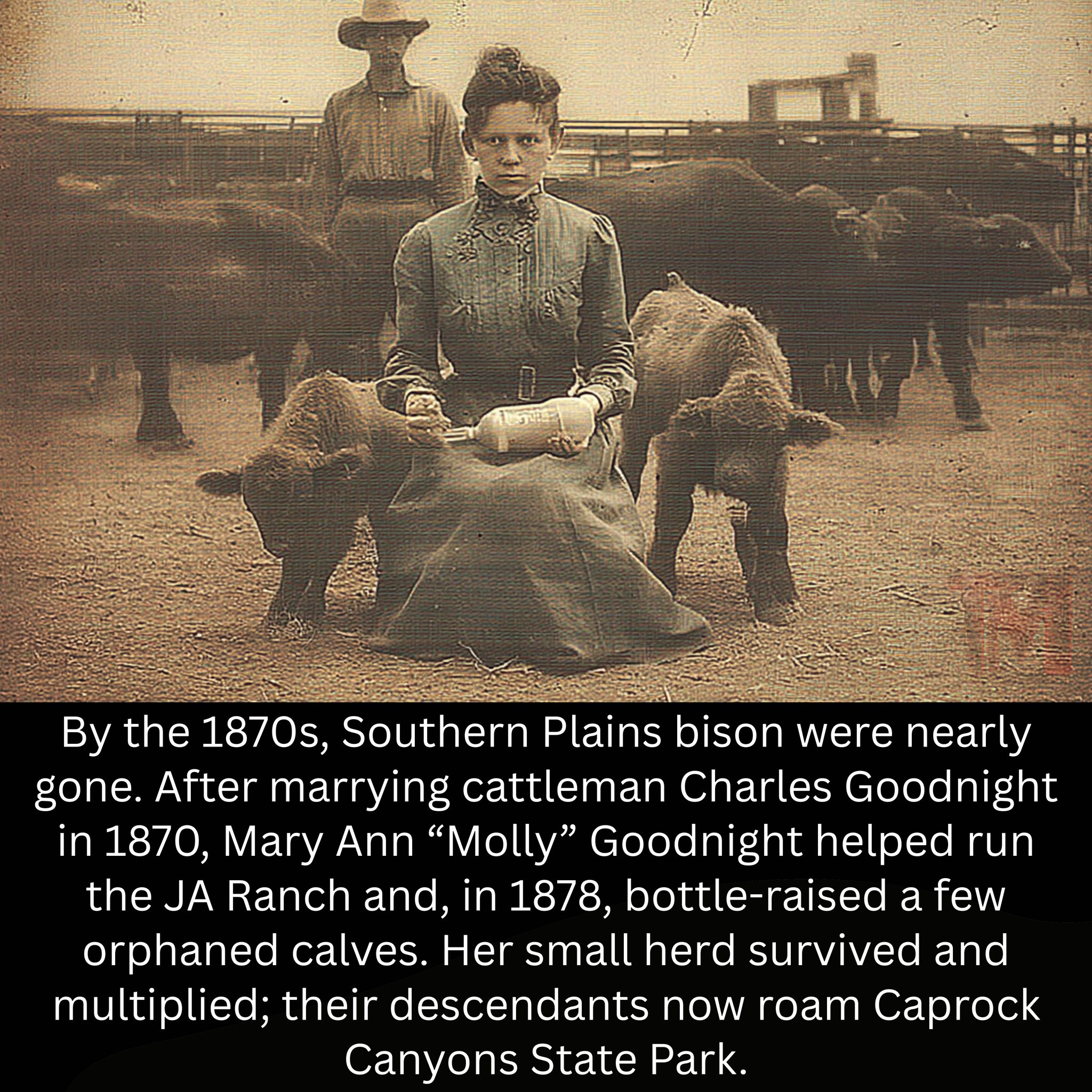
In the late 1870s, the great Southern Plains bison herds, once numbering in the millions, were being systematically eradicated by an onslaught of commercial hide hunters. This mass slaughter left the plains littered with carcasses and orphaned calves. Mary Ann “Molly” Goodnight, who had co-founded the JA Ranch in Texas’s Palo Duro Canyon with her husband Charles in 1876, was deeply distressed by the devastation. According to ranch lore, she was haunted by the cries of the abandoned calves and implored Charles to save some. In 1878, he and his cowboys located and captured a handful of orphans—some accounts say as few as two. Molly personally adopted the calves, bottle-feeding and hand-rearing them at the ranch headquarters, creating a small, protected herd that she nurtured even as the ranch’s massive cattle operations expanded.
By the mid-1880s, the wild Southern Plains bison was functionally extinct. The Goodnights’ private, protected herd became one of the last genetic refuges for the species and, crucially, the only significant group preserving the unique bloodlines of the native Texas bison. This herd grew under their care, but after their deaths, its future became uncertain. In 1996, the JA Ranch donated the remaining animals to the Texas Parks and Wildlife Department. After genetic testing confirmed their direct lineage to the calves Molly rescued, the herd was relocated in 1997 to Caprock Canyons State Park. Today, this herd, officially designated the Texas State Bison Herd, roams free, a living, tangible legacy of Molly Goodnight’s pioneering and compassionate conservation efforts.