






Now Reading: When My Dad Sat At The Little Table
-
01
When My Dad Sat At The Little Table

When My Dad Sat At The Little Table
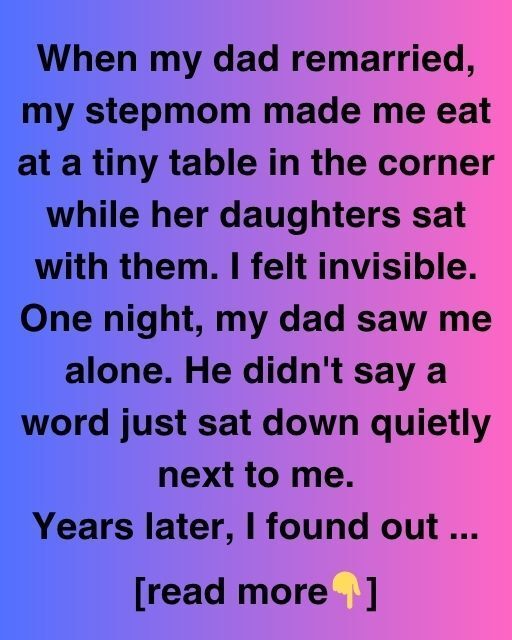
When my dad remarried, my stepmom made me eat at a tiny table in the corner while her daughters sat at the main table. I felt invisible. One night, my dad noticed me alone and silently sat beside me. I later learned he did this every time he saw me hurting, even if he didn’t know how to help.
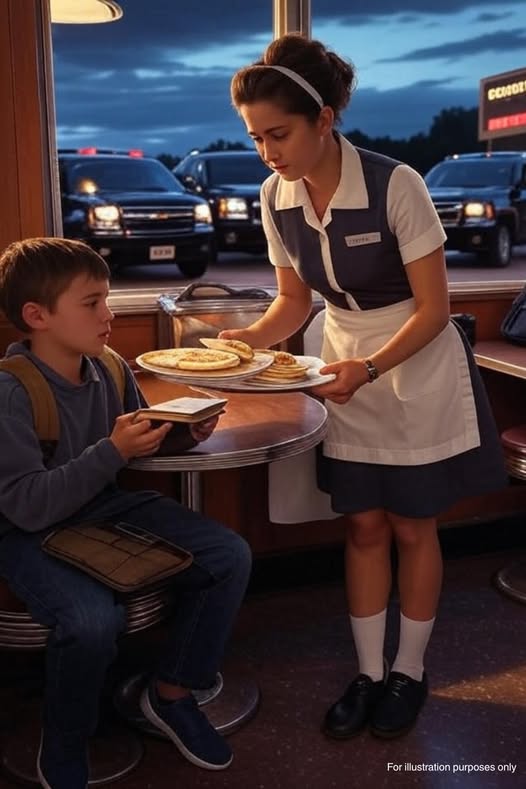
I was nine when Dad introduced Sandra, with her blonde hair, fake smile, and two daughters. I quickly realized I didn’t belong. At dinner, the fold-out table in the corner became my permanent spot. Sandra set rules that favored her daughters, and I was always the “moody” one. Dad, exhausted from work, rarely intervened, and our relationship drifted.
At eighteen, I left for college. Dad slipped a note in my pocket: “I see you. I always did. I just didn’t know how to fight for you. I’m sorry.” I cried—not just for years of loneliness, but because part of me had hoped he had noticed. College brought healing, friendships, and therapy for the little girl who ate alone.
Years later, Dad called. Sandra had left, taking her daughters to Arizona. We reconnected, and when I visited the house, the little table was still there, untouched. Over dinner, he admitted, “I used to sit with you at that little table even when you were asleep.” He had quietly shared my loneliness all those years, and he was learning to show love more openly.
We started new traditions—Sunday brunches, movie nights. At my wedding, Dad gave a toast, admitting he hadn’t always been the dad I needed, but he was proud of me. Later, he gave me the little table—sanded, repainted, with a note carved under it: “You were never invisible.” That table now reminds me that love can appear—even late—and that healing often comes simply from someone choosing to sit beside us.