












Now Reading: The Untamed Spirit: Geronimo and the Apache Resistance
-
01
The Untamed Spirit: Geronimo and the Apache Resistance

The Untamed Spirit: Geronimo and the Apache Resistance
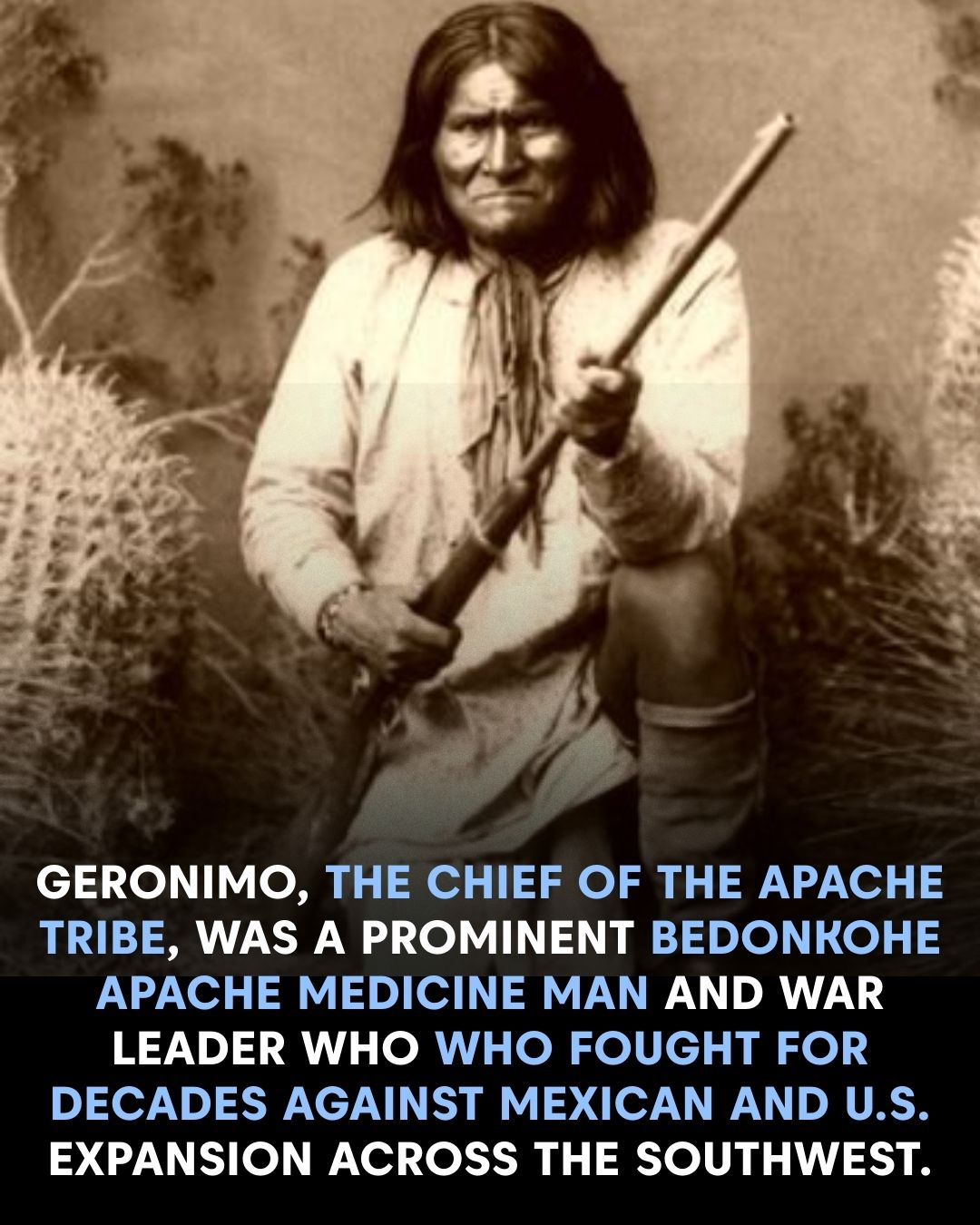
Geronimo remains one of the most storied figures in American history, a man whose name has become a universal shorthand for bravery and defiance. Born in the early 1820s in the upper Gila River country (modern-day New Mexico), he was not a chief by birth, but a Bedonkohe Apache medicine man and warrior. His journey from a spiritual leader to the face of Native American resistance is a testament to a life forged in the fires of personal tragedy and territorial encroachment.
A Warrior Forged in Grief
Geronimo’s transformation into a formidable insurgent was catalyzed by loss. In 1851, Mexican soldiers attacked his camp while the men were away trading, killing his mother, his wife, and his three young children. This devastating event pivoted his life’s mission toward a lifelong struggle against those who sought to displace the Apache people.
Armed with what his followers believed were spiritual powers—including invulnerability to bullets and the ability to see the future—Geronimo became a tactical mastermind. He led a series of daring raids across the Southwest, utilizing the rugged terrain of the Chiricahua Mountains to evade thousands of Mexican and American troops.
The Master of Evasion
What made Geronimo a legend was his supernatural ability to disappear. Leading a small, mobile band of men, women, and children, he navigated harsh deserts and vertical canyons that stymied professional armies. For decades, he was the “Houdini of the Desert,” frustrating the U.S. government’s attempts to confine the Apache to reservations.
His resistance was not merely about combat; it was a cultural stand against the systematic erasure of the Apache way of life. Even as his resources dwindled and his followers grew weary, Geronimo’s refusal to submit turned him into a global symbol of indigenous sovereignty.
The Final Surrender and Lasting Legacy
In 1886, Geronimo finally surrendered to General Nelson Miles, a move that effectively signaled the end of major Indian Wars in the United States. He spent the last 23 years of his life as a prisoner of war, never being allowed to return to his beloved homeland in Arizona.
Despite his captivity, his celebrity only grew. He appeared at the 1904 World’s Fair and rode in President Theodore Roosevelt’s inaugural parade. Today, Geronimo is remembered not as a defeated prisoner, but as a towering figure of cultural pride. His life serves as a powerful reminder of the human cost of expansion and the enduring strength of the spirit when fighting for home.