












Now Reading: The Power of Intuition: How a Flight Attendant Saved a Life at 30,000 Feet
-
01
The Power of Intuition: How a Flight Attendant Saved a Life at 30,000 Feet

The Power of Intuition: How a Flight Attendant Saved a Life at 30,000 Feet
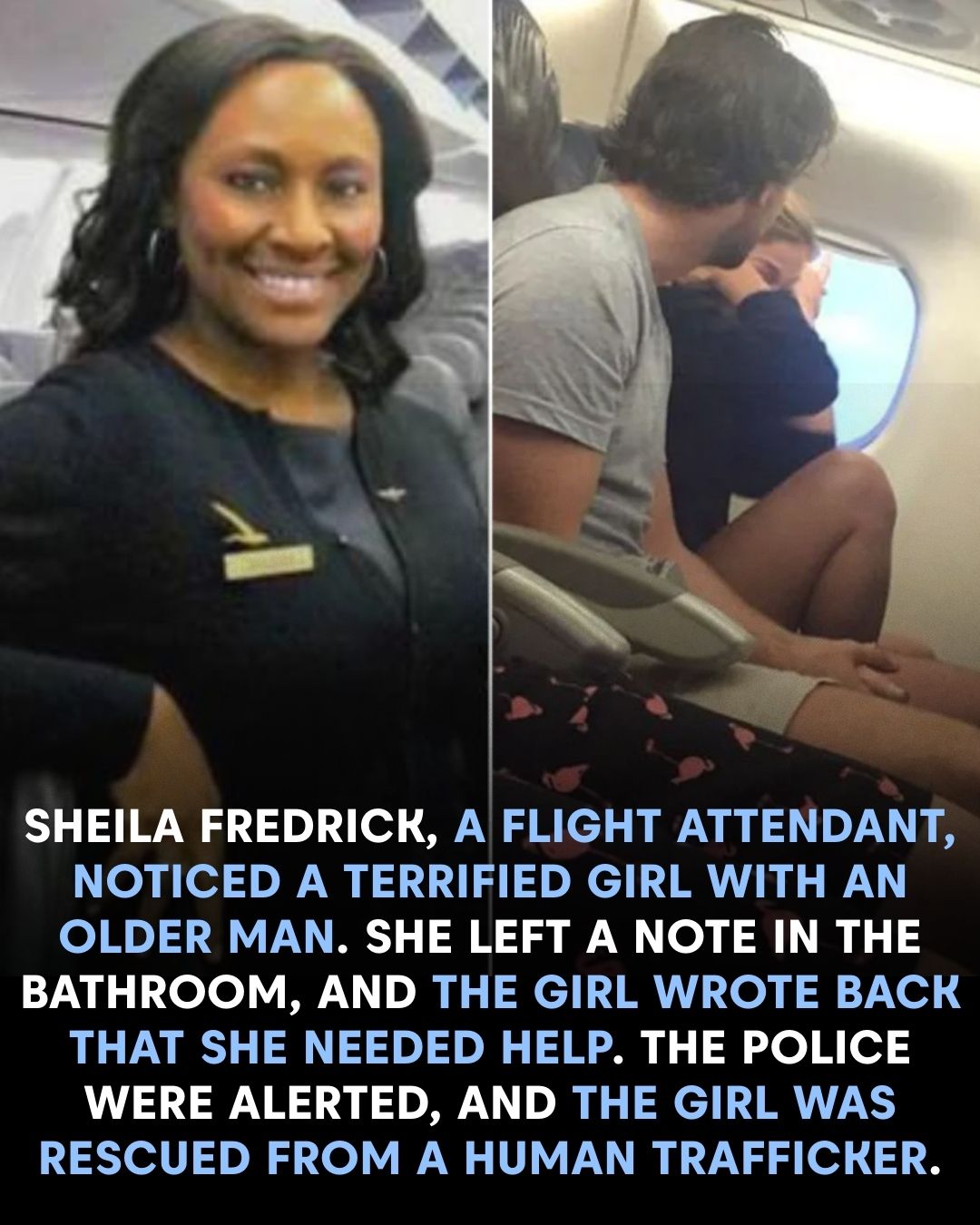
In the fast-paced world of commercial aviation, flight attendants are trained to prioritize safety, comfort, and logistics. However, in 2011, Alaska Airlines attendant Shelia Frederick proved that the most critical tool in a cabin crew’s arsenal isn’t a manual—it’s situational awareness. During a routine flight from Seattle to San Francisco, Frederick’s keen eye and quick thinking intercepted a human trafficking attempt, transforming a standard trip into a life-saving mission.
Recognizing the Red Flags
The rescue began not with a loud disturbance, but with a quiet observation. Frederick noticed a stark, unsettling contrast between two passengers: a disheveled, frightened teenage girl and a sharply dressed, older man. While the man appeared polished, the girl’s unkempt appearance and visible distress suggested a power dynamic that felt inherently wrong.
In the high-pressure environment of an aircraft, Frederick faced a choice: ignore the feeling or act. Choosing the latter, she relied on her professional training to look past the surface-level “business as usual” of the cabin and recognize the silent indicators of a victim in crisis.
A Discreet Lifeline
Direct confrontation is rarely the safest route in suspected trafficking cases, as it can put the victim in immediate danger. Frederick opted for a clever, low-profile communication method. She whispered to the girl, encouraging her to use the onboard lavatory. Inside, Frederick had hidden a pen and a scrap of paper, waiting for a signal.
The girl’s desperate response—a written plea for help—confirmed Frederick’s darkest suspicions. By using the bathroom as a “safe zone,” Frederick managed to gather intelligence without alerting the suspect, maintaining the safety of the entire cabin while building a bridge to the authorities.
“A single moment of awareness, coupled with a calm and methodical approach, can be the difference between a tragedy and a rescue.”
The Final Approach
Once the note was retrieved, the machinery of law enforcement began to turn. Frederick alerted the pilot, who radioed ahead to San Francisco. Upon landing, the standard deplaning process was replaced by a coordinated police intervention. Officers were waiting at the gate to take the suspect into custody and bring the young girl to safety.
Today, Shelia Frederick’s story serves as a cornerstone for human trafficking awareness campaigns worldwide. It highlights a vital lesson for travelers and professionals alike: intuition is a powerful diagnostic tool. By acting without panic, Frederick didn’t just perform her job—she rewrote the ending of a young woman’s life.