






Now Reading: The Altar and the Oval Office: Pope Leo XIV’s Spiritual Stance on Iran
-
01
The Altar and the Oval Office: Pope Leo XIV’s Spiritual Stance on Iran

The Altar and the Oval Office: Pope Leo XIV’s Spiritual Stance on Iran
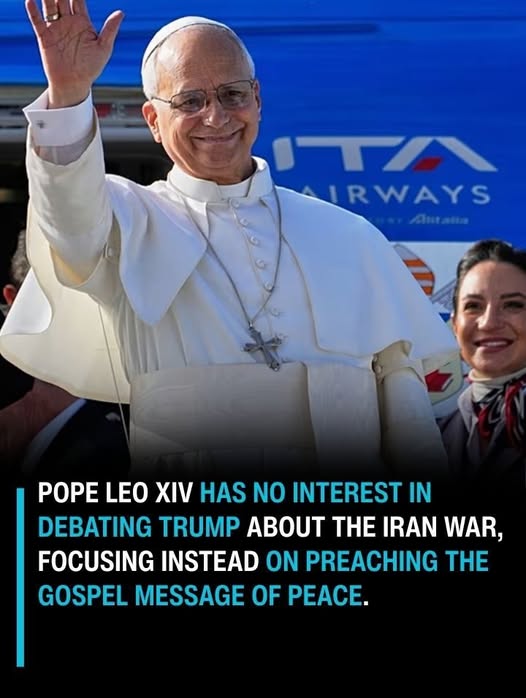
In an era where geopolitical tensions often bleed into public spectacles, a profound boundary has been drawn between the Vatican and the White House. Pope Leo XIV has formally declined to engage in a public debate with U.S. President Donald Trump regarding the ongoing conflict in Iran. This decision comes after weeks of escalating rhetoric, marking a significant moment where the world’s most prominent spiritual leader and one of its most powerful political figures find themselves at a crossroads.
The friction began when President Trump publicly characterized the Pope’s opposition to the Iran war as “weak” foreign policy. For an administration built on the doctrine of “strength,” the Vatican’s persistent calls for de-escalation were viewed by the President as a political hindrance. However, Pope Leo XIV, currently on a pastoral journey through Africa, has remained undeterred. Speaking from a continent that has long felt the scars of conflict, the pontiff emphasized that his role is not that of a political strategist, but of a shepherd.
“Debating a political leader is not the role of the Successor of Peter,” the Pope remarked, redirecting the narrative back to his core mission. He stressed that his focus remains steadfastly on the Gospel message of peace, dialogue, and justice. By refusing to enter the political “ring” with Trump, Pope Leo is signaling that the Church’s message is universal and timeless, rather than a mere reaction to the 24-hour news cycle or partisan feuds.
The Pope’s stance is rooted in a traditional interpretation of the papacy’s pastoral mission. He reiterated that his advocacy for an end to violence is grounded in Christian teachings, which prioritize the sanctity of life and the necessity of diplomacy over the machinery of war. To the Pope, his comments are not a “foreign policy” to be critiqued for its toughness or weakness; they are a spiritual mandate.
This visible divergence between religious and political leadership highlights a fundamental tension in modern global affairs. While the headlines often frame this as a personal clash, Pope Leo XIV has made it clear that he views his responsibility as spiritual first. By maintaining a dignified silence in the face of political provocation, the Pope seeks to remind world leaders—and the public—that the path to peace is found through quiet dialogue and reconciliation, rather than the loud theater of public debate. In doing so, he remains a singular voice for unity in a fractured world.