






Now Reading: The New Frontier of Strength: Why Vulnerability is the Peak of Masculinity
-
01
The New Frontier of Strength: Why Vulnerability is the Peak of Masculinity

The New Frontier of Strength: Why Vulnerability is the Peak of Masculinity
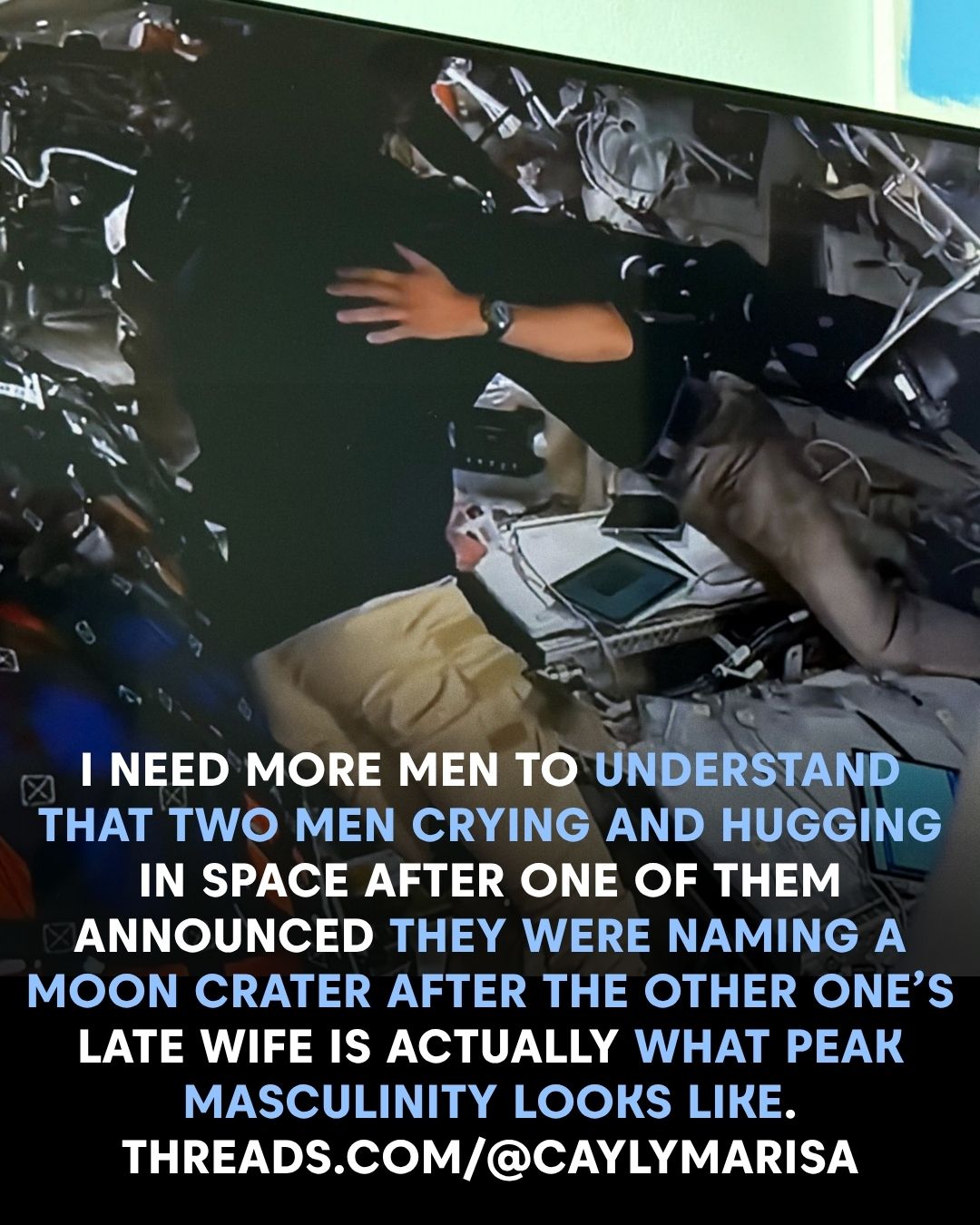
In the vast, silent vacuum of space, far removed from the social pressures of Earth, a moment occurred that redefined our understanding of “the right stuff.” When two men—highly trained, elite professionals—clung to one another in a tearful embrace after one honored the other’s late wife by naming a lunar crater after her, they weren’t showing weakness. They were demonstrating peak masculinity.
For decades, the archetype of the “manly” man was the stoic hero—the individual who suppressed emotion to ensure the mission’s success. But as we push further into the cosmos and deeper into the complexities of the 21st century, that old mold is cracking. True strength is no longer measured solely by the ability to endure physical hardship, but by the courage to be emotionally transparent.
The Honor of the Crater
The act of naming a lunar feature is a gesture of permanence. To take the name of a loved one who has passed and etch it into the celestial landscape is a profound act of legacy. When an astronaut chooses to use his limited influence to honor his colleague’s late wife, he isn’t just performing a nice gesture; he is acknowledging the deep, often invisible support systems that allow men to achieve greatness. He is validating his friend’s grief, signaling that even in the cold reaches of space, love and loss are the most significant things we carry with us.
Tears in Zero-G
Seeing two men cry together in such a high-stakes environment is a powerful subversion of “toughness.” It takes immense internal security to weep in front of a peer. In that hug, there is:
-
Trust: The knowledge that one’s vulnerability will not be used as a weapon.
-
Brotherhood: A bond that transcends technical cooperation and enters the realm of shared humanity.
-
Integrity: The refusal to pretend that profound moments don’t hurt or heal.
Redefining the Hero
We need more men to understand that this is the goal. Being a “provider” or a “protector” isn’t just about finances or physical safety; it’s about protecting the emotional well-being of those around you. When men allow themselves to feel and express the weight of their lives, they give others permission to do the same.
In the end, these astronauts showed us that the most “alpha” thing a man can do is be a whole human being. If you can traverse the stars and still have the humility to cry over the memory of a friend’s wife, you haven’t just conquered space—you’ve conquered the much more difficult terrain of the human heart.